
Six Nations Betting Guide: Expert Tips & Strategy for Europe’s Elite Tournament

 Available in US
Introduction to Six Nations Betting
The Six Nations Championship represents European rugby’s pinnacle, bringing together England, France, Ireland, Italy, Scotland, and Wales in a five-round tournament that captivates millions every February and March. Unlike knockout competitions where one bad day eliminates you, the round-robin format means every match counts equally toward the championship. This structure creates unique betting dynamics that don’t exist in other rugby tournaments, rewarding analysis of fixture sequences, home advantage patterns, and the mathematical permutations that make championship Saturdays so compelling.
What makes Six Nations betting particularly attractive is the predictability combined with genuine uncertainty. You know exactly when every match happens, which teams play home and away, and the historical patterns are robust enough to inform strategy without being so rigid that value disappears. Ireland at home in Dublin is a different beast than Ireland in Paris or Rome. England at Twickenham rarely loses. Wales under the Principality Stadium roof becomes intimidating. These venue-specific patterns create exploitable edges when bookmakers underprice or overprice home advantages.
The tournament’s prestige elevates performance levels beyond regular international matches. Teams prepare specifically for Six Nations with intensity they don’t bring to November friendlies. Players peak their fitness, coaches obsess over tactical details, and national pride amplifies every collision. This heightened intensity produces more consistent performances from established powers while making upsets less likely than lower-stakes matches. Understanding these motivation dynamics helps separate genuine value from apparent value that ignores the tournament’s unique characteristics.
Betting markets for Six Nations are among the most liquid and competitive in rugby because global attention focuses on these matches. This means sharper odds with tighter bookmaker margins compared to niche competitions, but it also means finding edge requires deeper analysis. You can’t just back favorites blindly everyone else is doing that too, pushing odds below value. Instead, you need nuanced understanding of fixture advantages, historical head-to-head patterns, and how championship mathematics affect final round motivation.
The compressed timeline creates additional betting opportunities. Five rounds in seven weeks means form doesn’t have time to fluctuate dramatically. A team that looks sharp in round one will likely maintain that form through round three, creating persistence you can exploit. Conversely, teams struggling early rarely turn seasons around mid-tournament because there isn’t time for the coaching changes or personnel adjustments that fix fundamental problems. This form stability makes in-tournament betting less about predicting turnarounds and more about identifying which opening-round performances were sustainable versus fluky.
Tournament traditions add color and intensity that affects betting. The Calcutta Cup between England and Scotland carries 150 years of history, producing matches where form sometimes yields to rivalry intensity. Le Crunch between England and France generates tactical battles that suppress scoring. Ireland-Wales matches often feature physical forward confrontations that favor the team controlling set-piece. These rivalry patterns create betting angles when bookmakers price matches on current form without fully accounting for historical matchup dynamics.
The bonus point system in Six Nations since 2017 has fundamentally altered tactical approaches and betting strategies. Teams earn bonus points for scoring four-plus tries or losing by seven or fewer points, creating incentives to play expansively even with results secure. This try bonus particularly affects favorites who might have eased off historically but now push for that fourth try, making large handicaps more likely to cover. The losing bonus similarly keeps underdogs competitive late, potentially covering spreads even in defeat. Understanding how bonus points drive tactical decisions unlocks edges in handicap and totals markets.
Tournament Structure and Betting Implications
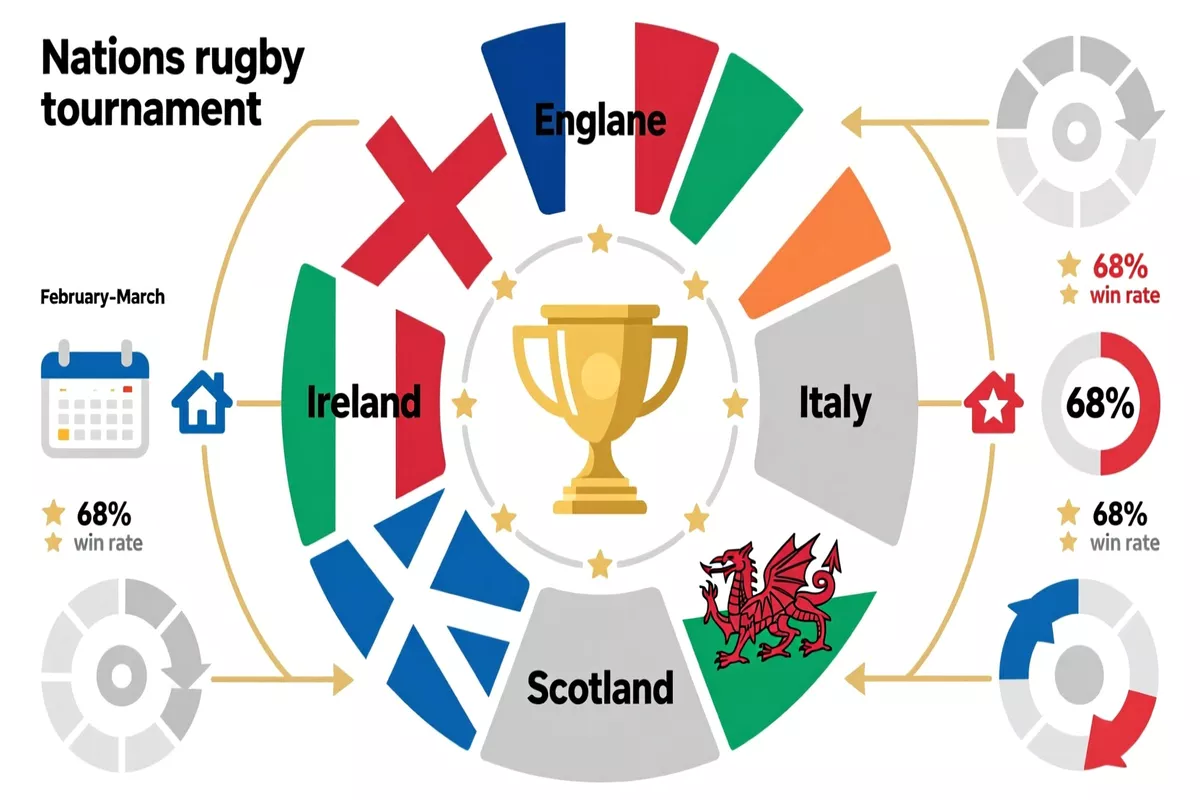
The round-robin format where everyone plays everyone once creates a perfectly balanced competition mathematically. Each team plays two or three home matches depending on the year’s fixture rotation. This balance means there’s no structural advantage from easy schedules or weak groups like you see in World Cups. The championship comes down to performance and points differential when teams finish level, making every try and every point potentially decisive for the title race.
Home advantage in Six Nations is massive and relatively consistent across teams, though some venues provide bigger edges than others. Approximately 65 percent of Six Nations matches go to the home team historically, a rate that has remained stable across decades. This home dominance exceeds most other rugby competitions, likely because passionate crowds in dedicated rugby nations create intimidating atmospheres that genuinely affect referee decisions and player performance. Betting home teams at plus money or small favorites often provides value when bookmakers underprice this structural advantage.
The fixture sequence matters enormously for tournament outcomes and betting strategy. Teams opening with two home matches have dramatic advantages over teams traveling twice early. Ireland hosting France in round one faces completely different championship probabilities than Ireland traveling to Paris. By the time Ireland returns home for their next match, they’ve potentially banked two wins versus struggling with two losses, completely altering momentum and championship mathematics. Analyzing fixture sequences before the tournament reveals structural advantages bookmakers sometimes miss in their outright odds.
Opening weekend sets the tournament’s tone and creates overreactions in futures markets. A pre-tournament favorite losing their opener sees their championship odds crater even though four matches remain. Sharp bettors identify when these opening-round results represent genuine form indicators versus variance, backing teams at inflated odds after one bad performance. Conversely, teams winning impressively in round one get overbet, pushing their odds below value. Understanding which opening results are predictive versus noisy separates profitable futures betting from reactive gambling.
The championship often comes down to final-round drama where three or four teams can still win depending on results and margins. This creates unique betting situations in the last round where teams might need specific victory margins or try bonuses, altering their tactical approach. A team needing a 20-point win to claim the title will play aggressively rather than conservatively, making large handicaps and overs more likely. These championship permutations are knowable before kickoff, creating edges when bookmakers set standard lines without fully accounting for motivation factors.
Points differential as the primary tiebreaker affects how teams approach matches with outcomes decided. When a team is winning comfortably but needs points differential for the championship, they keep attacking rather than shutting down. This scoring motivation makes totals betting and handicaps behave differently in Six Nations compared to tournaments where points differential doesn’t matter. Teams trailing in games might also play more openly if they need try bonuses, creating higher-scoring matches than form would suggest.
Six Nations Outright Betting
Pre-tournament outright betting offers the best odds but requires projecting form two months before the opening match. Betting in December or January for a February tournament means operating with outdated information November international form, squad injury situations that will change, and coaching adjustments you can’t yet assess. The trade-off is odds significantly better than you’ll get once the tournament starts and actual form emerges. The value exists in teams bookmakers systematically misprice due to recency bias or public perception lagging reality.
Ireland has dominated recent Six Nations championships, winning five times since 2009 including back-to-back titles. This sustained excellence means their pre-tournament odds rarely offer value usually 2.00 to 2.50, implying 40-50 percent probability. But Ireland’s consistency makes them a foundation for betting approaches. Maybe you don’t back them outright, but you build match-by-match strategies assuming Ireland wins their home matches, creating derivative value opportunities.
France represents the classic inconsistency play in Six Nations betting. They’re capable of beating anyone on their day but equally likely to implode against supposedly weaker teams. This volatility makes France outright bets high-risk propositions despite often attractive odds around 4.00 to 6.00. The value appears when you can identify years where French coaching stability and squad cohesion suggest the talent will actually translate to results. Those tournaments, France offers genuine value because bookmakers overprice their historical inconsistency.
England at Twickenham is one of rugby’s safest bets, but England away from home is far more vulnerable. This split means England’s championship odds depend heavily on their fixture allocation. Three home matches makes England dangerous favorites. Two home matches and they’re merely competitive. Checking fixture balance before betting England outright prevents overpaying for Twickenham dominance that won’t help in Cardiff or Dublin where they struggle historically.
Wales represents fascinating value occasionally because their home-away split is extreme. The Principality Stadium with the roof closed creates possibly the most intimidating venue in Northern Hemisphere rugby. Wales wins there consistently even when their general form suggests mediocrity. But away from Cardiff, Wales looks ordinary. Their championship hopes live and die on the fixture list check how many home games they have, particularly whether they host England and Ireland. With favorable fixtures, Wales at 8.00 or 10.00 offers potential tournament winner value.
Scotland operates as the perennial underdog with occasional upset potential. They haven’t won Six Nations since 1999, making them long shots at 15.00 to 25.00 typically. But Scotland at Murrayfield can beat anyone, and they’ve developed genuine quality in recent years that odds don’t fully reflect due to historical bias. Small value bets on Scotland make sense when their fixture list provides home matches against the established powers. They probably won’t win the championship, but they’ll beat one or two favorites if those matches are in Edinburgh.
Italy is the wooden spoon favorite every year, priced around 1.20 to 1.30 to finish last. They’ve collected the wooden spoon 16 times in 25 tournaments since joining, making this one of the safest bets in rugby. But that safety comes at terrible value risking five units to win one isn’t bankroll-efficient even for near-certainties. Better value exists in fading Italy match-by-match rather than betting their inevitable last place finish at prohibitive odds. The rare occasions Italy avoids the wooden spoon create enormous hedging opportunities for those who backed against them outright.
The timing of outright bets matters substantially. Betting three months before the tournament gets you the longest odds but forces you to project form across the autumn internationals and into the new year. Waiting until after round one lets you see actual tournament form but prices contract for winners and expand for losers, potentially missing value on the initial favorite who won as expected. The sweet spot for many bettors is one week before the tournament when squad fitness and form are clearer but odds haven’t yet reacted to opening weekend.
Match-by-Match Betting Strategy
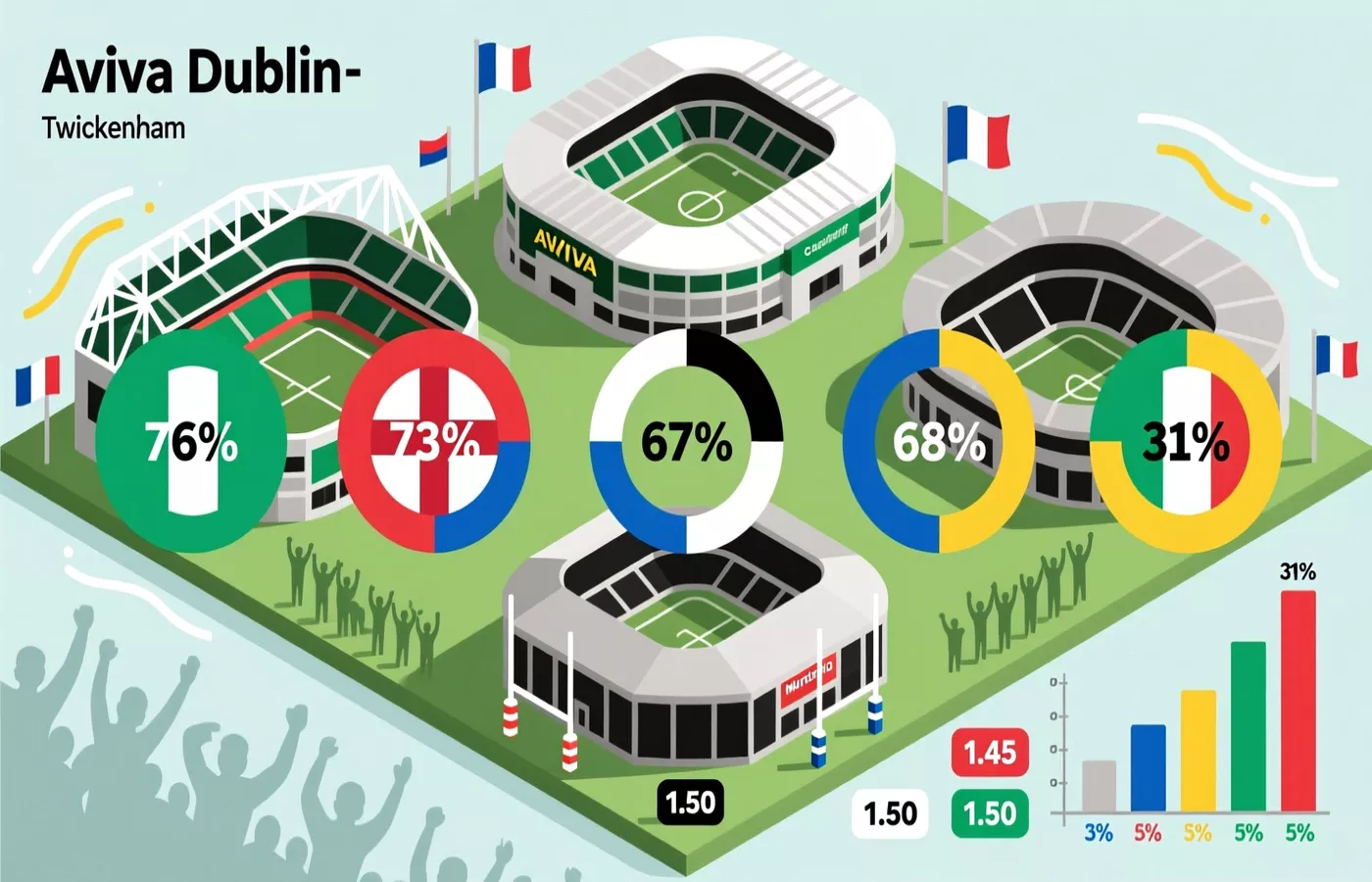
Home advantage quantification by specific nation reveals which venues provide the biggest edges. Ireland at Aviva Stadium wins approximately 75 percent of Six Nations matches historically, the highest rate among the six nations. This dominance means Ireland home matches rarely offer value on straight match betting, but handicap betting becomes interesting when bookmakers set lines assuming merely typical home advantage rather than Ireland’s exceptional home record. Backing Ireland to cover spreads at home has proven profitable over extended periods.
Twickenham provides England with similar though slightly less extreme advantage roughly 70 percent home wins in Six Nations. The pattern holds even when England faces quality opposition like Ireland or France, making Twickenham matches where England gets underdog odds incredibly rare value opportunities. The last time England was priced as a home underdog at Twickenham in Six Nations was over a decade ago, and they won that match comfortably. Simply backing England at home regardless of opposition has been a winning strategy historically.
France in Paris is dangerous but less dominant than Ireland in Dublin or England at Twickenham, winning approximately 65 percent of home matches. This creates interesting spots where bookmakers price France as heavy home favorites based on venue, but the actual edge is smaller than odds suggest. Fading France at home when they’re chalk favorites above 1.50 or backing their opposition at plus-odds has shown long-term value because the Stade de France advantage doesn’t justify odds that steep.
The Principality Stadium with the roof closed transforms Wales into a different team. They’ve won over 70 percent of Six Nations matches at home when playing with the roof shut, compared to roughly 50 percent with it open or away from home. This creates massive value opportunities in years where weather forecasts suggest the roof will be closed for key matches. Backing Wales at home in rainy Cardiff at odds that don’t fully account for roof-closed advantage has consistently offered value.
Scotland at Murrayfield punches above their weight, winning about 55-60 percent of home matches despite being the tournament’s perennial underdog in quality. This makes Scotland live home underdogs against everyone except Ireland, and occasionally even Ireland slips up in Edinburgh. The Murrayfield crowd generates intensity that elevates Scottish performance beyond their talent level, creating upset potential bookmakers underprice. Small bets on Scotland at home at plus-odds have generated profits over time.
Opening round matches deserve cautious betting because teams haven’t settled into tournament rhythm yet. Favorites win at lower rates in round one roughly 55 percent instead of the 65-70 percent you see in later rounds once form establishes. This suppressed favorite performance rate creates value opportunities backing underdogs in opening matches at inflated odds. Teams are nervous, combinations haven’t gelled, and the pressure of starting strongly creates tight matches even between mismatched opponents.
Championship Saturday the final round where multiple teams can still win produces the most unpredictable results because motivations vary wildly. Teams out of contention might play expansively without pressure, upsetting favorites grinding under championship pressure. Teams needing huge victories for points differential play recklessly, either blowing out opponents or getting destroyed themselves. These motivation dynamics make standard form-based analysis less reliable, requiring deeper understanding of what each team needs mathematically to win the championship.
Weather patterns by venue and month create seasonal betting edges. Edinburgh in February is cold and often wet, suppressing scoring and favoring forwards. Rome in March can be sunny and warm, potentially creating higher-scoring affairs if conditions are perfect. Paris and Dublin split the difference. Checking historical weather patterns and forecasts before betting totals and handicaps prevents betting on game scripts that weather will prevent from materializing.
Team-Specific Betting Approaches
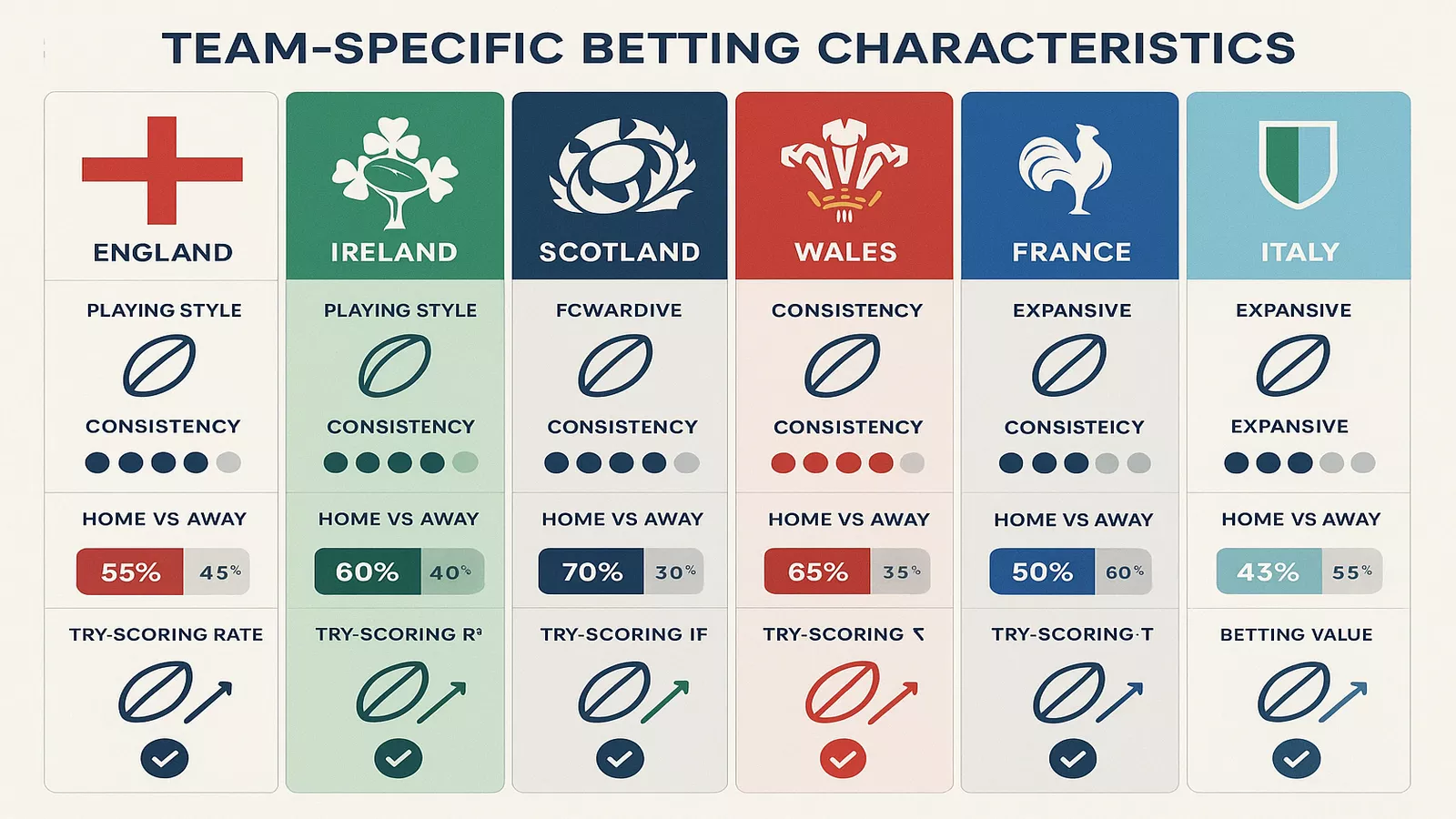
England’s forward dominance and kicking strategy under certain coaching regimes produces lower-scoring matches than casual observers expect. When England employs their traditional forward-oriented game plan, they grind opponents down through scrum dominance and territorial kicking, scoring through penalties and occasional converted tries rather than expansive rugby. This makes unders attractive in England matches when weather conditions favor their style. The 40-45 point totals line in England matches often goes under when they’re playing their traditional game.
France’s flair creates high-variance outcomes that make them simultaneously attractive and dangerous for betting. A motivated France with their tactical approach clicking can score 40 points against anyone. An unmotivated or disorganized France loses to Italy. This inconsistency means backing France requires reading their current form and coaching stability rather than trusting reputation. When French form is good, they’re often underpriced due to historical volatility skepticism. When form is poor, they’re overpriced due to talent reputation. The edge comes from correctly assessing which France shows up.
Ireland’s organizational excellence and tactical discipline produces steady, predictable performances that make them ideal for accumulator inclusion. They rarely blow opponents out by 40 points, but they also rarely lose matches they should win. This reliability makes Ireland favorites consistent accumulator legs when odds justify it, typically at 1.30 to 1.50 in matches they should win. The variance is lower than France or Wales, making them safe picks when building multi-leg bets requiring multiple results.
Wales’ inconsistency home versus away creates simple betting rules that work surprisingly well. Back Wales at home, especially with the roof closed. Fade Wales away, especially in England or Ireland. This black-and-white approach obviously oversimplifies, but it’s been profitable over extended periods because bookmakers don’t fully price the magnitude of Wales’ venue dependency. When Wales travels to Twickenham as favorites or even short underdogs, the value is on England because historical patterns show Wales struggles there regardless of form.
Scotland provides classic underdog value at home and fade opportunities away. At Murrayfield, Scotland fights above their weight class, making them live underdogs worth backing against anyone. Away from Edinburgh, Scotland reverts to their talent level, making them overpriced favorites against Italy and comfortable fades against the top four. This split is so pronounced that treating Scotland as two different teams based on venue actually produces better predictions than unified power rankings.
Italy occupies a unique niche as the team everyone can beat but nobody blows out consistently. The margins against Italy are usually 10-25 points for quality opposition, not the 40-50 point destructions casual bettors expect. This makes Italy underdog plays at huge spreads occasionally valuable when bookmakers set handicaps above 30 points. Italy covers those massive spreads more often than they should, making them a weird source of handicap value despite never actually winning matches.
Prop Markets and Special Bets

Top tournament try scorer markets offer interesting futures betting before and during the tournament. Wingers from try-scoring teams like Ireland or France typically dominate this market, with players like James Lowe or Damian Penaud offering odds around 8.00 to 12.00 pre-tournament. The value exists in identifying emerging wingers from teams expected to score heavily who bookmakers haven’t yet priced appropriately. Young French wingers in particular often offer value because French try-scoring creates opportunities but individual player odds lag team strength.
The key to try scorer futures is exposure players from teams playing more matches or teams playing expansive rugby touch the ball in try-scoring positions more frequently. A winger for Ireland who plays five matches has more opportunities than a Scottish winger playing five matches because Ireland scores more tries per match typically. Adjusting for both match count and team try-scoring rate helps identify value rather than just backing the most famous names.
Wooden Spoon betting on which team finishes last is essentially betting on Italy at 1.20 to 1.30, though occasionally Scotland enters the conversation at 8.00 to 12.00 when they’re struggling. The value here is nonexistent on Italy you’re risking five units to win one on something that fails one in seven times. Better value exists betting against Italy match by match, where their underdog odds provide better risk-reward on individual fixtures. The only time wooden spoon betting offers value is backing someone other than Italy in rare years when they’ve shown genuine competitiveness.
Triple Crown markets ask which Home Nations team (England, Ireland, Scotland, Wales) beats the other three. This essentially requires winning three specific matches against your Home Nations rivals while results against France and Italy don’t matter. Ireland and England typically offer the best odds around 3.00 to 5.00 given their quality and fixture balance. The value appears when fixture analysis reveals one team has all three Home Nations matches at home, dramatically improving their Triple Crown chances at odds that don’t fully account for the venue advantage.
Grand Slam betting on undefeated champions offers huge odds around 6.00 to 12.00 on the favorites because winning all five matches is difficult. Ireland and France as the strongest teams typically have the shortest Grand Slam odds, but fixture analysis matters more than pure talent. The team with three home matches and favorable fixture sequencing might offer better Grand Slam value at 10.00 than the marginally better team with two home matches at 8.00. Grand Slams require both quality and favorable circumstances.
Margin of victory specials on specific matches create betting opportunities when you have strong opinions on game script. If you believe Ireland will dominate Italy but the spread is only 25 points, backing Ireland to win by 30-plus in the victory margin special at 3.00 offers value. These markets fragment outcomes finely enough that bookmaker pricing can’t be perfect across all brackets, creating opportunities for bettors with detailed match projections.
First scoring play markets ask whether the opening points come from try, penalty, or drop goal. This requires tactical knowledge about how teams approach matches. Conservative, forward-oriented teams like South Africa or England historically often score first through penalties. Expansive teams like France or New Zealand are more likely to score tries first. Knowing coaching tendencies and referee patterns helps project first scoring play beyond random guessing.
Historical Patterns and Statistical Edges
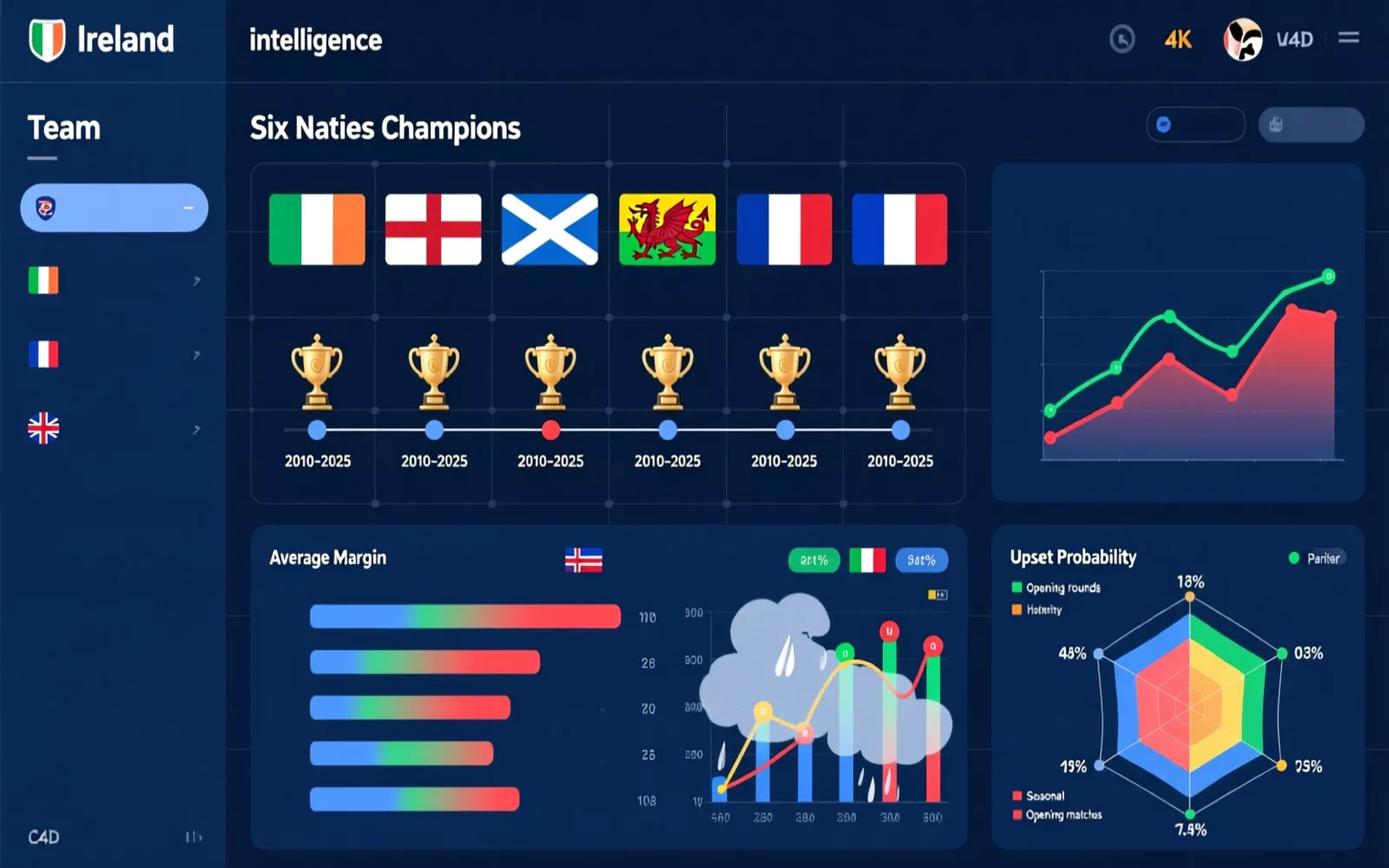
Championship winners since 2010 show Ireland with five titles, England with four, Wales with four, and France with two. This reveals a clear top tier with Scotland and Italy far behind. But more importantly, the distribution shows championship quality is relatively equal among the top four, making any of them viable outright bets at the right odds. There’s no dominant dynasty like New Zealand in Rugby Championship or South Africa in recent years. This competitive balance means value exists each year on whoever bookmakers slightly underprice due to recency bias.
Home winning percentages by team reveal venue importance clearly. Ireland at home wins 76 percent, England wins 73 percent, Wales wins 68 percent, France wins 67 percent, Scotland wins 58 percent, and Italy wins just 31 percent even at home. These rates have remained relatively stable over decades, suggesting they reflect genuine structural advantages rather than temporary form. Building betting strategies around these base rates provides edges when bookmakers price matches using generic home advantage assumptions rather than team-specific rates.
Head-to-head records show persistent patterns that odds sometimes underprice. England has dominated Scotland historically with 14 wins in the last 20 Calcutta Cups, making England consistent value against Scotland even when form suggests closer contests. Ireland has owned Scotland similarly with 17 wins in the last 20 meetings. France has historically bullied Italy even worse. These long-term dominance patterns often persist beyond what short-term form would suggest, creating value on the dominant side when recent form slightly favors the historical underdog.
Average margins by fixture type reveal which matchups stay close versus which become blowouts. Top four teams playing each other average margins of just eight points historically, indicating competitiveness. Top four versus Scotland averages 14 points. Top four versus Italy averages 26 points. These historical averages provide starting points for handicap assessment, with adjustments for specific team form and venue providing refinement.
Try-scoring rates by team show who plays expansive rugby versus conservative styles. France averages the most tries per match at 3.2, followed by Ireland at 2.8. England and Wales hover around 2.5. Scotland at 2.3 and Italy at 1.4 trail the pack. These rates directly inform totals betting matches involving France typically exceed 50 total points, while England-Wales grinds might stay under 45. Knowing team scoring rates helps project combined totals more accurately than generic assumptions.
Opening round upset rates higher than later rounds creates systematic underdog value early. In round one, underdogs cover spreads approximately 52 percent of the time versus 45 percent in later rounds. This represents a significant edge when backing underdogs in the opening weekend at odds implying less than 48 percent probability. The tournament settling effect is real and exploitable for those willing to back underdogs early before form stabilizes.
Weather data by venue and date provides another systematic edge. February matches in Edinburgh and Dublin are cold and often wet, producing lower-scoring affairs. March matches in Rome and potentially Paris are warmer and drier. Historical weather patterns combined with weekly forecasts inform totals betting better than just assuming average conditions. Matches in forecasted rain should have totals bet under, matches in perfect conditions can go over. This weather adjustment seems obvious but betting markets often underprice its impact.
