
Rugby Betting Bankroll Management: The Path to Long-Term Profitability

 Available in US
Why Bankroll Management Matters
Bankroll management is the difference between treating rugby betting as a legitimate skill-based endeavor versus a slow-motion train wreck where you eventually lose everything. You can identify value bets better than anyone, possess encyclopedic rugby knowledge, and correctly predict outcomes 60 percent of the time, but if you’re betting half your bankroll on individual matches, you’ll go bust before your edge materializes into profit. The math is unforgiving and variance is inevitable.
The fundamental concept underpinning bankroll management is variance the statistical reality that short-term results deviate wildly from long-term expectations. Even if your betting strategy has genuine positive expected value, you’ll experience losing streaks that feel endless. Five straight losses, eight losses in ten bets, a brutal month where nothing goes right. These sequences happen to everyone, including professional bettors with proven track records. Proper bankroll management ensures you survive these inevitable downswings with enough capital remaining to exploit the eventual upswings.
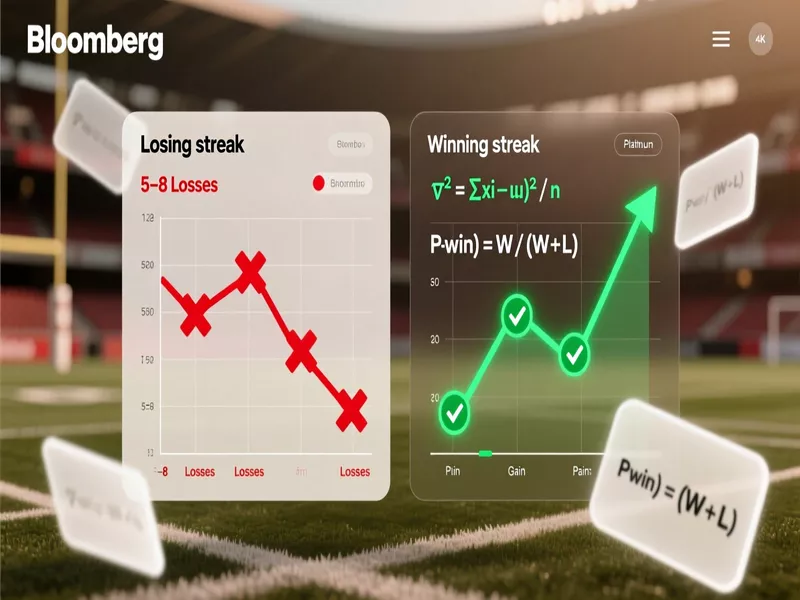
Think about it this way: if you bet your entire bankroll on a single match at even odds, you have a coin flip chance of doubling your money or losing everything. That’s not betting, that’s gambling in its purest, most reckless form. But if you bet two percent of your bankroll per match, you can lose 20 consecutive bets before going bust. Those 20 losses are statistically improbable if you’re betting value, giving your edge time to assert itself through the noise of short-term variance.
The mathematics of betting sustainability revolve around the relationship between edge, variance, and bankroll size. Your edge is the percentage by which your expected return exceeds the break-even point. If you’re betting teams at 2.00 odds and winning 52 percent of the time instead of the 50 percent break-even, you have a four percent edge. That edge generates profit over thousands of bets, but it can easily be overwhelmed in the short term by variance if your bet sizing is too aggressive.
Professional bettors obsess about bankroll management because they understand something casual bettors don’t betting is a marathon, not a sprint. You’re not trying to double your money this weekend. You’re trying to generate consistent returns over months and years by making marginally better predictions than the market prices suggest. This long-term perspective requires capital preservation as the top priority, with profit maximization as a secondary concern that only matters once you’ve ensured survival.
The emotional component of bankroll management often exceeds the mathematical importance. When you’re betting appropriate percentages of your bankroll, losses sting but don’t devastate. You can maintain analytical discipline because no single bet threatens your entire operation. But when you’re over-leveraged, every bet becomes terrifying. You sweat matches you should be watching neutrally. You make emotional hedges at terrible prices just to reduce anxiety. Your betting becomes reactive and fearful rather than calculated and confident.
Rugby betting specifically demands conservative bankroll management because the sport produces more variance than many bettors expect. Unlike football where goals are rare and favorites win regularly, rugby sees underdogs pull off upsets through individual brilliance, weather impacts, or random bounce of an oval ball. Handicap betting adds another variance layer because margins cluster around key numbers in unpredictable ways. A match that should be decided by 12 points ends at 14 or 10, swinging bet outcomes despite correctly identifying the superior team.
Setting Your Betting Bankroll
Your betting bankroll must be completely separate from money you need for living expenses, savings, emergency funds, or any other financial obligations. This isn’t just practical advice it’s psychological necessity. If you’re betting rent money or grocery funds, the stress will destroy your decision-making capacity. Every loss threatens your financial security rather than just being a statistical inevitability in a long-term strategy. This pressure causes desperate betting, chasing losses, and eventual catastrophic failure.

The practical starting point involves honest self-assessment of your disposable income. After covering all necessary expenses and reasonable savings, what money remains truly disposable? Be ruthlessly honest here. Disposable means you could lose it entirely without affecting your life quality, relationships, or financial stability. For some people, that’s 500 dollars. For others, it’s 5,000 or 50,000. The absolute number doesn’t matter what matters is that losing it would be disappointing but not devastating.
A common mistake beginners make is funding betting bankrolls with money they hope to grow into something they need. Setting aside 1,000 dollars you’re supposed to turn into 5,000 for a vacation creates terrible incentives. You’ll take excessive risks trying to hit unrealistic targets, abandoning disciplined bankroll management when variance inevitably runs negative. Your betting bankroll should be money you’ve already written off emotionally, where any growth is bonus rather than requirement.
Starting bankroll recommendations vary, but 1,000 to 2,000 dollars provides enough cushion for meaningful unit-based betting while remaining accessible to recreational bettors. This allows 1-2 percent unit sizing that generates reasonable action without sweating every bet. Professional bettors often operate with 20,000 to 100,000 dollar bankrolls, but they’re betting for income rather than entertainment. Scale your bankroll to your goals and financial situation without trying to mimic professionals who operate in completely different circumstances.
Bankroll replenishment is where things get tricky. Should you add money to your bankroll after losses? Should you withdraw profits periodically? There’s no universal answer, but one effective approach treats the bankroll as a closed system for defined periods. Set your initial bankroll, then don’t add or remove money for three months. This forces you to live with your results and prevents the dangerous pattern of continually reloading after losses while never banking profits. After three months, reassess based on actual performance.
If your bankroll grows significantly during that three-month period, consider withdrawing a portion while leaving the rest to continue compounding. Maybe you started with 1,000 and grew it to 1,500. Withdraw 300, leaving 1,200 as your new bankroll going forward. This locks in profit psychologically while giving you a larger operating base. If your bankroll shrinks, you need to make a hard decision: accept the loss and reload with fresh disposable income, or stop betting until you can properly fund a bankroll again. Reloading repeatedly while losing is throwing good money after bad.
The risk-of-ruin concept governs bankroll sizing mathematically. Risk of ruin represents the probability you’ll lose your entire bankroll before your edge generates sustainable profit. Aggressive bet sizing might produce faster growth when things go well, but it increases risk of ruin dramatically. Conservative sizing reduces growth speed but makes ruin extremely unlikely. The Kelly Criterion, which we’ll discuss later, attempts to optimize this trade-off, but most professionals use fractional Kelly specifically to reduce ruin risk below the mathematically optimal level.
Your bankroll should scale with your experience and proven success. Starting with 1,000 dollars makes sense when you’re learning and haven’t demonstrated profitable betting. After a year of tracked, profitable betting, upgrading to a 5,000 dollar bankroll rewards your success and allows larger absolute bet sizes. But this growth should be earned through results, not aspirational thinking. Don’t fund a professional-sized bankroll until you’ve proven you can beat the market consistently at smaller stakes.
Unit-Based Betting Systems
Unit-based betting revolutionizes bankroll management by converting every bet into a standardized measurement rather than arbitrary dollar amounts. One unit equals a fixed percentage of your bankroll, typically 1-2 percent, creating a system where your actual bet size adjusts automatically as your bankroll grows or shrinks. This dynamic sizing protects you during losing streaks while letting you capitalize on winning runs without manual calculations.
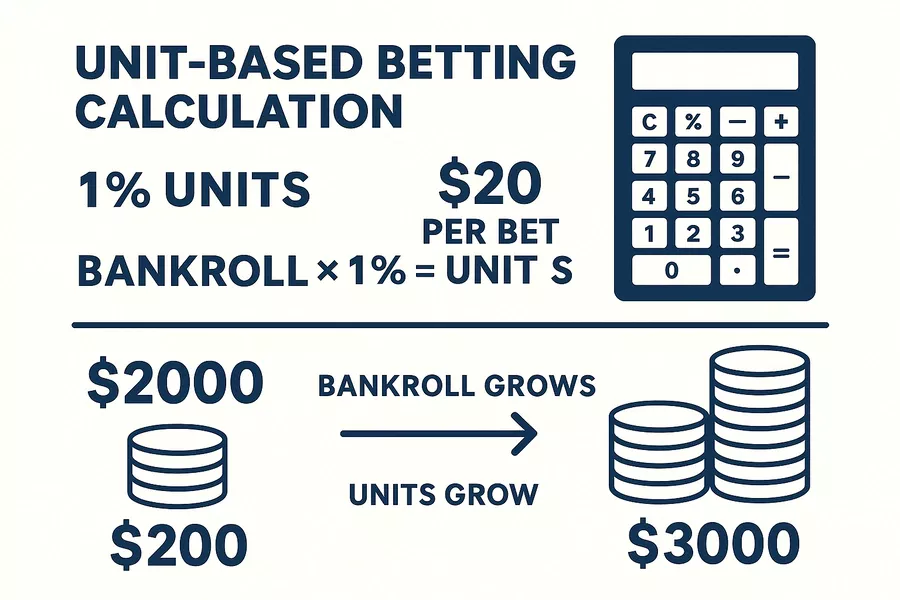
The mathematics is straightforward. With a 2,000 dollar bankroll and one-unit equaling one percent, your standard bet is 20 dollars. If your bankroll grows to 2,400, one unit becomes 24 dollars. If it shrinks to 1,600, one unit becomes 16 dollars. This automatic adjustment prevents the classic mistake of maintaining constant bet sizes while your bankroll evaporates, or failing to increase bets as your bankroll grows and leaving profit on the table.
Most serious rugby bettors use units between 0.5 and 3 percent of bankroll depending on confidence. A standard bet might be one unit, representing neutral confidence that you’ve identified fair odds. High confidence bets where you’ve spotted clear value might be 2-3 units. Very speculative or experimental bets might be 0.5 units, where you want exposure without significant risk. This variable unit sizing based on confidence allows nuanced risk management while maintaining systematic discipline.
The beauty of unit-based betting extends beyond mathematics into psychology. When you think in units rather than dollars, you detach emotionally from the specific amounts. Losing a 20 dollar bet feels different than losing “one unit,” even though they’re identical. This psychological distance helps maintain discipline because you’re thinking in terms of a systematic strategy rather than watching your money disappear. Professional gamblers in all domains use this mental trick to remain analytical under pressure.
Flat staking represents the simplest and arguably most effective unit-based approach every bet is exactly one unit regardless of odds, confidence, or bet type. This eliminates all sizing decisions and behavioral biases about which bets deserve larger stakes. The research on this is clear: most bettors overestimate their confidence and bet too heavily on perceived advantages that don’t exist. Flat staking removes these judgment errors entirely, producing better risk-adjusted returns for most people compared to variable staking they execute poorly.
The counter-argument for flat staking claims it leaves money on the table by not increasing stakes when you have genuine edges. This is mathematically true if you could perfectly assess your edge on every bet, variable staking would outperform flat staking. But the key phrase is “if you could perfectly assess.” In reality, we’re all terrible at estimating our confidence accurately. We convince ourselves we know more than we do, resulting in oversized bets on mediocre opportunities. Flat staking protects us from ourselves.
Variable staking based on perceived edge works for experienced bettors who’ve proven through extensive tracked betting that they can accurately assess when they have legitimate advantages. If your records show that bets you rated as “high confidence” actually won at rates justifying larger stakes, then variable unit sizing makes sense. But this requires hundreds of tracked bets with honest confidence assessments that prove you’re calibrated, not just guessing. Until you have that evidence, stick with flat staking.
Recalculating your unit size periodically keeps your bet sizing aligned with current bankroll reality. Some bettors recalculate daily, adjusting their unit size every morning based on yesterday’s results. This maximizes bankroll efficiency but requires discipline and adds administrative burden. Others recalculate weekly or monthly, accepting some inefficiency in exchange for simplicity. Monthly recalculation works well for most recreational bettors it’s frequent enough to stay aligned but infrequent enough to not become tedious.
The psychological adjustment when your unit size changes requires attention. After a hot month where your bankroll grew 30 percent, your new one-unit bet size is 30 percent larger. This can feel uncomfortable even though it’s mathematically correct. You’re betting more absolute dollars per bet, which triggers loss aversion instincts. Recognizing this psychological resistance and pushing through it separates successful bankroll managers from those who plateau by refusing to increase bet sizes proportional to growth.
Staking Plans for Different Bet Types
Match winner betting typically warrants standard unit sizing because these bets represent straightforward binary outcomes with relatively predictable variance. Whether you’re backing favorites or underdogs, the single-outcome nature means one unit per bet makes sense. The exception might be huge underdogs at 5.00-plus where you reduce to 0.5 units because the variance increases substantially at those odds. But most match winner bets between 1.50 and 3.00 fit comfortably at one unit.
Handicap betting introduces more variance than straight match bets because you’re predicting not just winner but margin. A team might win comfortably but fail to cover the spread, or lose but cover easily. This added uncertainty suggests slightly smaller unit sizing maybe 0.75 units instead of one full unit. The variance increase isn’t dramatic enough to warrant major reduction, but acknowledging that handicap results are slightly less predictable than match results keeps your overall risk appropriate.
Accumulator staking requires dramatically different approaches because these bets are inherently high-variance, low-probability propositions. Even a simple three-leg accumulator at 1.80 odds per leg creates a combined 5.83 bet with roughly 17 percent win probability. These should never be standard unit size. Instead, consider accumulators as speculative bets at 0.25-0.5 units maximum. The boosted odds provide upside when they hit, but the low win rate means you’re essentially buying lottery tickets with better odds than actual lotteries.
The temptation with accumulators involves their potential returns. A three-leg accumulator at 0.5 units might return three units profit if successful, making it attractive when you’re confident in each leg. But you need to win more than one in six accumulators to profit given bookmaker margins, and most bettors win far less frequently than they expect. Treating accumulators as small entertainment bets rather than serious profit generators protects your bankroll while maintaining the fun factor they provide.
Live betting demands unique staking considerations because of the rapid-fire nature and emotional intensity. Many successful live bettors reduce their standard unit size to 0.5-0.75 units for in-play bets specifically because you’re making decisions in seconds rather than hours, increasing error risk. The faster decision-making means you’re more likely to make mistakes, so reducing unit size provides cushion against those errors while still allowing profit from successful live betting strategies.
Some bettors use progressive staking in live betting specifically starting with small exploratory bets, then increasing size once they’ve confirmed their read on the match is accurate. The first live bet might be 0.5 units testing whether their momentum assessment is correct. If that bet wins, confirming their analysis, they increase to one unit on subsequent bets within that match. This graduated approach limits losses when match reads are wrong while maximizing profits when everything clicks.
Try scorer betting and other prop bets represent the highest variance rugby markets because so many possible outcomes exist and unpredictability is inherent. These markets should never be standard unit size. Instead, 0.25-0.5 units makes sense for most prop bets, acknowledging that you’re taking longer odds on less predictable outcomes. The higher payouts when these bets hit compensate for the smaller stakes, while the reduced size prevents props from dominating your bankroll risk.
Tournament futures and outright winner bets justify slightly different thinking because they’re effectively long-term investments rather than week-to-week bets. A Six Nations winner bet placed in January won’t resolve for two months. During those two months, that money is locked up and unavailable for other bets. Some bettors account for this by either reducing unit size on futures to 0.5-0.75 units, or by segregating a separate portion of bankroll specifically for futures that doesn’t impact their week-to-week unit sizing.
Risk Management Strategies
Maximum daily loss limits represent the single most powerful bankroll protection mechanism. Before betting each day, decide the maximum you’ll lose before stopping completely. Maybe that’s three units, maybe five, depending on your risk tolerance. Once you hit that limit, you stop regardless of how many matches remain or how attractive opportunities seem. This hard stop prevents the catastrophic sessions where you chase losses all day, compounding mistakes until you’ve destroyed a week or month of profits in hours.
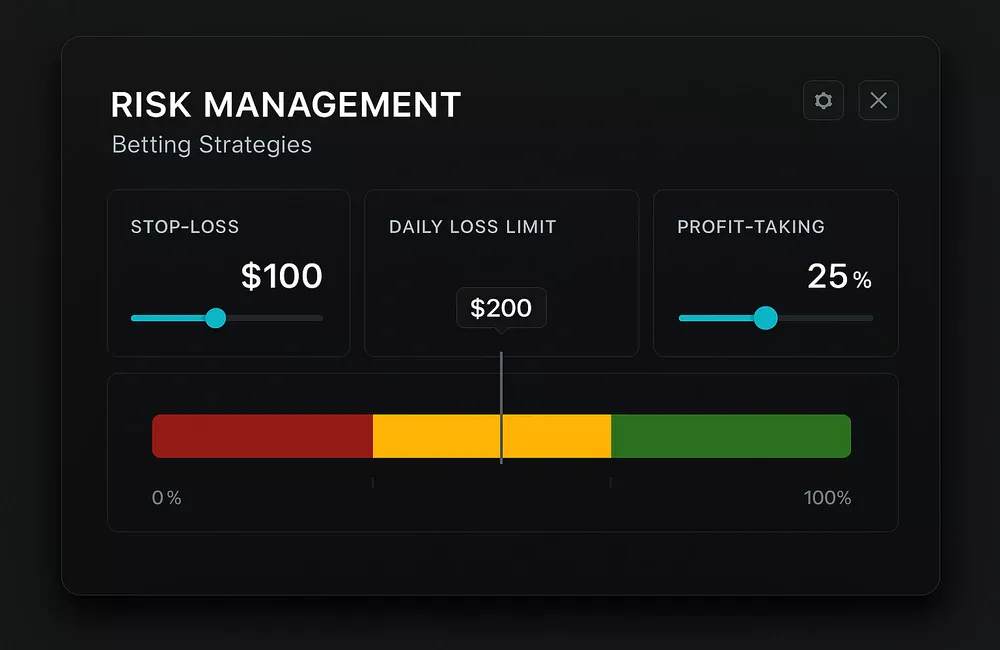
The psychological difficulty of actually implementing loss limits cannot be overstated. When you’re down three units and see what looks like a perfect opportunity to win it back, every instinct screams to keep betting. Your brain convinces you that this time is different, this bet will definitely hit, you’ll recoup everything and end the day profitable. This is how casual bettors blow up bankrolls. You need predetermined commitment that when you hit the limit, you close the app and walk away, no exceptions, no justifications.
Win limits work similarly but focus on the opposite scenario. After a great day where you’re up four or five units, the temptation is continuing to press your perceived hot hand. But hot hands are mostly illusion the bets won because you had edge, not because you achieved some transcendent betting state. Implementing win limits protects those good days from giving back profits through overconfidence and excessive action. Maybe you stop after five units won, pocketing a great day rather than risking it unnecessarily.
Stop-loss triggers tied to overall bankroll percentage rather than daily limits provide a safety net against extended losing streaks. If your bankroll drops 25 percent from its peak, you trigger a mandatory assessment period where you stop betting for a week and review every bet from the losing streak. This forced pause prevents you from grinding your bankroll down 50 percent or more before acknowledging something is wrong with your approach. The review might reveal you were making good bets that ran into variance, or it might expose systematic errors in your methodology.
Profit-taking strategies ensure you bank winnings periodically rather than eternally chasing compounding growth. One effective approach: whenever your bankroll grows 25 percent, withdraw 20 percent of the total and move it to savings or another account. This locks in profit in real money rather than just numbers on a screen, providing tangible reward for your skill. The remaining 80 percent becomes your new operating bankroll, larger than before but with some profits secured.
The alternative approach involves setting profit targets maybe you want to generate 2,000 dollars per year from rugby betting. When you hit that annual target, you withdraw everything above your starting bankroll and begin the next year fresh. This goal-oriented method creates clear motivation and ensures betting serves a purpose beyond itself. You’re betting to fund something specific rather than just watching numbers increase indefinitely.
Emotional control techniques form the foundation of risk management because rational decision-making disappears when emotion takes over. One proven method involves mandatory breaks after every bet regardless of outcome. Win or lose, you step away from betting for five minutes. This cooling period prevents the euphoria of wins or frustration of losses from immediately influencing your next bet. You return to neutral analytical state rather than chasing feeling.
Record keeping enables risk management by providing objective evidence of your performance and patterns. A detailed spreadsheet tracking every bet’s date, match, market, stake, odds, result, and reasoning creates a database revealing your strengths and weaknesses. Maybe you discover you’re profitable on handicap bets but losing money on try scorers. This data-driven insight lets you adjust your approach, doubling down on what works while eliminating or reducing what doesn’t.
The honesty required for effective record keeping is where most bettors fail. It’s easy to log the good bets and convenient to forget the stupid ones you made while drunk or emotional. But those bad bets are exactly the data you need to improve. Every mistake logged is a future mistake prevented. Professional bettors maintain brutally honest records because they know self-deception is fatal in a game where the house has mathematical edge and your only advantage comes from superior analysis and discipline.
Common Bankroll Mistakes
Chasing losses represents the most expensive bankroll management error and the quickest path to ruin. You lose three bets in a row, down three units, and logic says you should recoup that immediately. So you bet larger on the next match two or three units instead of one hoping to erase the deficit quickly. This doubles your risk exactly when you should be reducing it. If that larger bet loses, you’re down five or six units and now truly desperate, leading to even worse decisions in an accelerating spiral.
The mathematics of loss chasing are unforgiving. To recoup a 30 percent bankroll loss through normal one-unit bets, you need to win those bets back gradually over time. But most bettors lack the patience for slow recovery, instead making outsized bets at worse odds trying to get even immediately. This typically converts manageable 30 percent drawdowns into catastrophic 60-80 percent losses that destroy betting careers.
Betting beyond your bankroll through credit, loans, or money meant for other purposes is the terminal mistake that converts gambling from entertainment or profit pursuit into life-destroying addiction. The moment you’re betting money you don’t have or can’t afford to lose, you’ve crossed into dangerous territory requiring immediate intervention. No betting edge justifies financial destruction, relationship damage, or the stress of covering losing bets with money needed for rent or bills.
Poor record keeping or no record keeping prevents improvement and masks declining performance until serious damage has occurred. Without tracking, you rely on memory and gut feel about whether you’re winning or losing. Our brains naturally remember wins more vividly than losses, creating false confidence about profitability. You might be grinding slowly toward zero while convinced you’re doing well, only discovering the truth when your bankroll has significantly depleted.
The specific danger in rugby betting involves the variance and the gaps between bets. You might bet heavily on Six Nations in March, lose money, then not bet seriously again until November internationals. Without records, you forget the March losses by November and think of yourself as break-even when you’re actually significantly down. Only comprehensive logging across all time periods reveals true performance.
Failing to adjust unit size as bankroll changes is equally destructive in both directions. If your bankroll grows but you keep betting the same absolute amounts, you’re not capitalizing on success. You built the bankroll to a larger level specifically so you could bet more and generate more profit. Refusing to increase bet sizes means your growth slows unnecessarily.
Conversely, maintaining the same bet sizes while your bankroll shrinks accelerates the decline. If you started betting 20 dollars per match with a 2,000 dollar bankroll (one percent units) and now you’re at 1,000 dollars but still betting 20 dollars, you’re actually betting two percent units. This increased relative risk compounds your problems during losing streaks, making recovery even harder.
Mixing recreational and serious betting from the same bankroll creates accounting confusion and poor decision-making. Maybe you’re a disciplined bettor on rugby but occasionally bet other sports recreationally. If you mix these from one bankroll, your rugby profit gets masked by recreational losses elsewhere, or vice versa. Worse, the recreational mentality might bleed into your rugby betting, degrading the discipline that made it profitable. Keeping separate bankrolls for different betting activities maintains clear boundaries and honest assessment.
Unrealistic profit expectations doom most new bettors before they begin. Entering rugby betting thinking you’ll double your money monthly sets you up for disappointment and risky behavior when reality diverges from fantasy. Professional sports bettors aim for 10-20 percent annual returns, not monthly doubles. If you’re beating the market by five percent annually, you’re doing extremely well in an efficient market with small edges. Accepting this reality helps maintain the patience necessary for long-term success.
Advanced Bankroll Concepts
The Kelly Criterion represents the mathematically optimal bet sizing strategy that maximizes long-term bankroll growth based on your edge and the odds available. The formula is straightforward: fraction of bankroll to bet equals edge divided by decimal odds minus one. If you have a five percent edge betting at 2.00 odds, Kelly suggests betting five percent of your bankroll. This mathematical optimization produces maximum growth rate while theoretically preventing ruin.

The catch is that Kelly requires perfect knowledge of your true edge, which nobody has. Overestimating your edge even slightly leads to massive overbetting and elevated ruin risk. If you think you have a five percent edge but actually have three percent, Kelly tells you to bet nearly double what you should. This overbet substantially increases variance and can lead to ruin even with a genuine edge.
That’s why virtually all professional bettors use fractional Kelly instead of full Kelly. Half-Kelly bets half the amount Kelly suggests, quarter-Kelly bets a quarter. These fractional approaches sacrifice some theoretical growth speed but dramatically reduce volatility and risk of ruin. Most professionals use quarter-Kelly to half-Kelly specifically because it provides most of the growth benefits while protecting against edge estimation errors and the psychological difficulty of riding full-Kelly variance.
Portfolio theory applied to betting involves thinking about your total betting portfolio rather than individual bets in isolation. Just like financial investors diversify across multiple assets, bettors can diversify across multiple bet types, markets, and sports. This diversification reduces overall portfolio volatility because different bet types aren’t perfectly correlated. Your handicap bets and try scorer bets and futures bets all experience variance, but not simultaneously, smoothing your overall bankroll curve.
The practical application involves allocating your bankroll across different betting strategies based on each strategy’s volatility and expected return. Maybe you allocate 50 percent to standard match betting, 30 percent to handicap betting, 15 percent to live betting, and 5 percent to tournament futures. This allocation prevents any single strategy from dominating your risk, improving risk-adjusted returns even if some individual strategies underperform.
Cross-sport bankroll allocation makes sense for bettors who follow multiple sports with genuine edge in each. Rather than one unified bankroll, you might maintain separate allocations for rugby, football, tennis, or whatever sports you bet seriously. This separation prevents a bad run in one sport from depleting capital you need for other sports where you’re performing well. It also provides clearer performance tracking per sport, revealing where your actual edges lie.
Seasonal adjustment in rugby specifically makes sense because the sport has clear peak and off-peak periods. Six Nations in February-March, Rugby Championship in August-September, World Cup years, club seasons running September through May these create natural ebbs and flows in betting opportunities. Some bettors reduce their bankroll commitment during off-peak periods when fewer matches mean fewer opportunities, reallocating capital elsewhere, then increase allocation when peak periods arrive.
The compound growth mindset separates long-term successful bettors from those who plateau. Small edges compounded over time create remarkable growth. A five percent edge betting consistently with proper bankroll management can double your money annually. But this requires patience to let compounding work rather than withdrawing profits constantly or taking unnecessary risks trying to accelerate growth. Understanding the power of compounding helps maintain discipline during the inevitable variance that makes short-term results frustrating.
