
Live Rugby Betting Strategy: Master In-Play Wagering for Maximum Profit

 Available in US
Introduction to Live Rugby Betting
Live betting transforms rugby from a pre-match prediction exercise into a dynamic trading environment where odds shift constantly and opportunities appear and disappear within seconds. You’re not just predicting what will happen anymore you’re reacting to what is happening, watching momentum build, seeing which team controls territory, noticing when a key player limps off injured, and capitalizing on information that static pre-match odds couldn’t possibly account for.
Rugby suits live betting better than most sports because the action never truly stops. There are no timeouts for coaches to reset strategies, no commercial breaks killing momentum, no substitution pauses that give everyone time to reassess. The ball is in play for 35-40 minutes per half, creating continuous flowing action where advantages compound and disadvantages spiral. This constant movement means odds need updating every few seconds, and bookmakers can’t always price everything perfectly in real-time.
The fundamental advantage you gain through live betting is information. Sitting in your living room or at the stadium watching the match gives you the same visual information bookmakers use to set their live odds, but you see it simultaneously with them rather than after the fact. When a team scores, you both know instantly. When a player gets injured, you both see it. When weather worsens mid-match, you both experience it. This information parity creates opportunity because you can interpret the information differently than the algorithm adjusting odds.
Pre-match betting forces you to project 80 minutes into the future based on statistics, team news, and historical patterns. Live betting lets you respond to actual reality unfolding in front of you. Maybe you thought England would dominate France, but 20 minutes in, France is controlling possession and territory while England looks disorganized. Live betting allows you to abandon your pre-match thesis and back what’s actually happening rather than stubbornly riding a sinking ship.
The speed requirement separates live betting from pre-match analysis. You need to make decisions in seconds sometimes, not hours. When a try gets scored and odds shift dramatically for 30 seconds before settling, you either capitalize immediately or miss the window. This pressure creates mistakes from casual bettors who panic-bet on excitement rather than calculated probability shifts. Your edge comes from maintaining discipline while everyone else chases action emotionally.
Streaming technology has democratized live betting in ways that didn’t exist a decade ago. Most major bookmakers offer free live streams of matches they’re taking bets on, eliminating the information disadvantage casual bettors once faced. You’re not betting blind anymore based on score updates you’re watching the same match the bookmaker’s traders watch. This levels the playing field substantially, though having sharp analytical skills while watching still provides edge over algorithms and casual bettors alike.
The markets available in-play extend far beyond simple match result betting. Next try scorer, total points in the next ten minutes, will there be a try before half-time, team to score next, updated handicaps reflecting current score, adjusted totals dozens of micro-markets create dozens of potential edge opportunities if you know what you’re watching for. This market variety means you don’t need to bet every match. You can wait for specific situations where your analysis suggests clear value.
Reading Game Momentum in Real-Time
Momentum in rugby is brutally real and dramatically affects live betting value. When a team scores two quick tries within ten minutes, confidence surges through their side while the opposition often wilts temporarily. Players move faster, make better decisions, communicate more effectively. The opposition tightens up, makes defensive errors, loses composure. This momentum frequently persists for 15-20 minutes before equalizing, creating windows where the momentum-holding team offers better value than their live odds suggest.
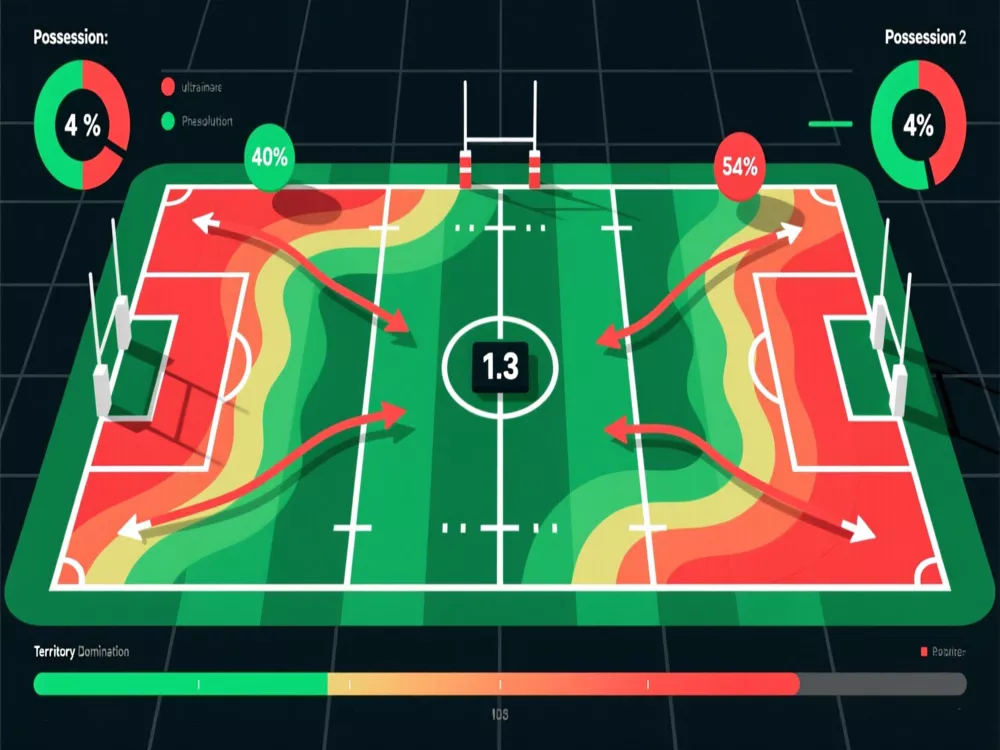
Territory control is the clearest momentum indicator that odds sometimes lag. When a team spends 80 percent of a 15-minute period in the opposition half, they’re creating constant pressure even if the scoreboard doesn’t reflect it yet. Eventually that territorial dominance converts to points through penalties, defensive errors, or sustained attacking phases. Backing the team controlling territory at odds that haven’t adjusted from the opening kickoff captures value before the inevitable scoring follows.
Counting the phases is revealing when watching live rugby. A team that consistently makes 10-15 phases before losing possession demonstrates control and patience that will generate scoring opportunities. Their opposition defending for those extended periods accumulates fatigue that compounds into defensive breakdowns. When you see this pattern developing but the score remains close, backing the team making consistent phase play offers value before their dominance shows on the scoreboard.
Possession statistics matter but require context. A team with 65 percent possession is dominating if they’re using that possession effectively in attacking areas. But 65 percent possession while making handling errors and going backward actually indicates disorganized offense that won’t convert to scoring. Live statistics feeds showing possession need interpretation alongside what you’re seeing visually about possession quality.
Penalty counts reveal which team is under pressure and which team controls the referee’s perception. When one team concedes six penalties in 15 minutes, they’re either playing indisciplined rugby or the referee is singling them out. Either way, the opposition benefits from field position and potential yellow cards that create temporary numerical advantages. Tracking penalty counts as they accumulate helps predict when yellow cards might come, creating try-scoring windows that live odds often underprice.
Scrum dominance in rugby union specifically indicates forward pack superiority that affects the entire match. When one team wins every scrum and pushes the opposition backwards, they control set-piece, earn penalties, and gain psychological advantage. This scrum dominance eventually translates to tries because the opposition can’t maintain defensive structure while being physically dominated. Recognizing sustained scrum superiority early allows backing that team before the dominance manifests in scores.
Weather changes during matches create massive live betting opportunities because pre-match odds couldn’t account for conditions that didn’t exist yet. You’re watching in perfect sunshine, then heavy rain arrives at half-time. Suddenly the free-flowing rugby that was expected becomes a grinding forward battle. Teams relying on expansive backline play lose their advantage while forward-oriented teams improve. These mid-match weather shifts require odds adjustments that bookmakers make gradually, creating windows where value exists for alert bettors.
Substitution timing reveals coaching decisions and energy management. When a team brings on three fresh forwards at 50 minutes while leading, they’re managing the game and prioritizing fitness for the final 30 minutes. When a trailing team makes substitutions at 50 minutes, they’re trying to change momentum and inject impact. These substitution patterns indicate coaching confidence or desperation, affecting momentum and creating live betting angles on whether leads expand or narrow.
Injury situations demand immediate attention in live betting. A key fly-half limping off injured completely changes a team’s game management and attacking structure. Their replacement might be significantly worse at kicking for territory or orchestrating attacks. The opposition suddenly has easier defensive assignments because the backup player lacks the same threat. These injuries create instant value shifts that you can capitalize on by betting against the injured team before odds fully adjust.
Optimal Market Entry Timing
The opening ten minutes of rugby matches produce chaotic action where both teams establish rhythm and figure out opposition patterns. Live odds during this period fluctuate wildly based on early territory and possession without necessarily reflecting sustainable momentum. Entering markets too early during this settling period means betting on variance rather than form. Waiting until 15-20 minutes when patterns emerge and you understand which team controls the match creates more reliable betting opportunities.
Some bettors prefer the opposite approach targeting the opening minutes specifically because odds haven’t stabilized and overreactions happen frequently. When a team scores in the third minute, live odds shift dramatically even though one early try doesn’t indicate 80-minute dominance. Fading that overreaction by backing the opposition at inflated odds captures value if you believe the early score was random rather than indicative. Both approaches work depending on match context and your assessment of whether early action reflects sustainable patterns.
Mid-match betting from 25-55 minutes represents the sweet spot for most live bettors. Patterns have emerged, fatigue hasn’t become overwhelming yet, and enough time remains for bets to resolve. This middle period produces reliable momentum reads because you’ve seen both teams attack and defend multiple times, giving you sample size to assess quality beyond randomness. Handicap bets and totals bets particularly work well in this timeframe when you can project final scores based on established patterns.
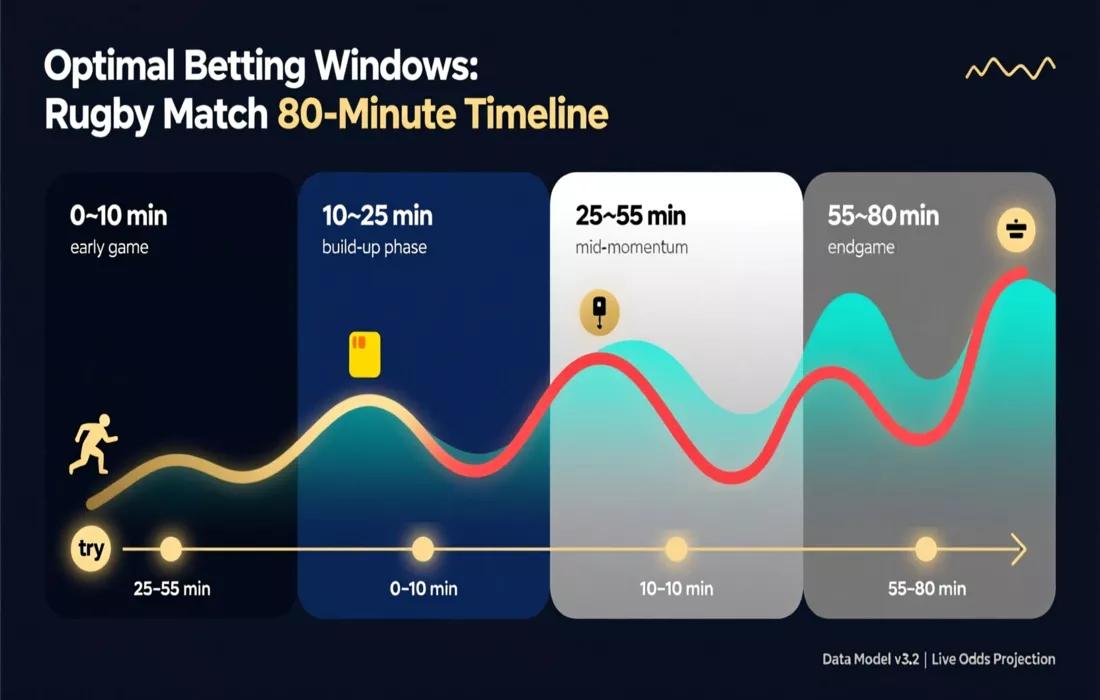
The final 20 minutes create unique opportunities but require different analysis frameworks. Tired players make more mistakes, fitness advantages compound, and game script shifts based on score. Trailing teams take risks and play expansively, potentially scoring quickly or getting blown out trying. Leading teams often tighten their game, protect leads, and run clock, suppressing scoring rates. Understanding these late-game patterns helps identify whether totals will go over or under and whether handicaps will cover or fail.
Score differential dramatically affects optimal entry timing. When matches are close within seven points throughout most of the game, opportunities exist constantly because the outcome remains genuinely uncertain. When one team builds a 20-point lead by half-time, live betting becomes about whether the lead expands or narrows rather than overall winner. These blowout scenarios require completely different analytical frameworks focused on garbage-time scoring patterns rather than competitive momentum.
Half-time represents a crucial inflection point that creates unique betting windows. The ten minutes before half-time reveal which team finishes stronger and carries momentum into the break. The ten minutes after half-time show which team made better adjustments and comes out refreshed versus which team looks sluggish. Betting during the half-time period itself when markets pause allows you to process the first half and formulate second-half strategies without the pressure of constantly moving odds.
Yellow and red cards completely reset matches and create obvious value opportunities if you react faster than odds adjust. When a team loses a player to a yellow card for ten minutes, they play with 14 versus 15, creating numerical disadvantage that should result in conceded points. But bookmakers sometimes underprice how much difference that temporary advantage makes. Backing the team with numerical advantage immediately after the card is shown, before odds fully contract, capitalizes on the adjustment lag.
Weather-related timing matters specifically for matches where conditions deteriorate during play. If heavy rain is forecast for the 60th minute, pre-match odds might not fully account for this. Watching in the 50-55 minute window as rain arrives lets you bet totals or playing style bets before the market fully adjusts to the changed conditions. This requires checking hourly weather forecasts and being prepared to bet when the conditions shift as predicted.
Live Betting Markets Explained
Next try scorer is the most popular live try scorer market, offering odds on which player scores the immediate next try. These odds update constantly based on field position and possession. When a team camps on the opposition try line, their forwards’ odds contract dramatically because a close-range try from forward pick-and-go becomes highly probable. When play is in midfield with no immediate scoring threat, all odds lengthen proportionally. Reading field position and attacking patterns helps identify which positions most likely produce the next try.
The beauty of next try scorer versus pre-match try scorer is you know the game state. Maybe a winger was poor value pre-match at 7.00, but 60 minutes in with his team dominating in opposition territory and him having touched the ball frequently, his next try scorer odds at 5.00 actually represent good value. The context of current momentum and field position provides information that pre-match odds couldn’t possibly incorporate.
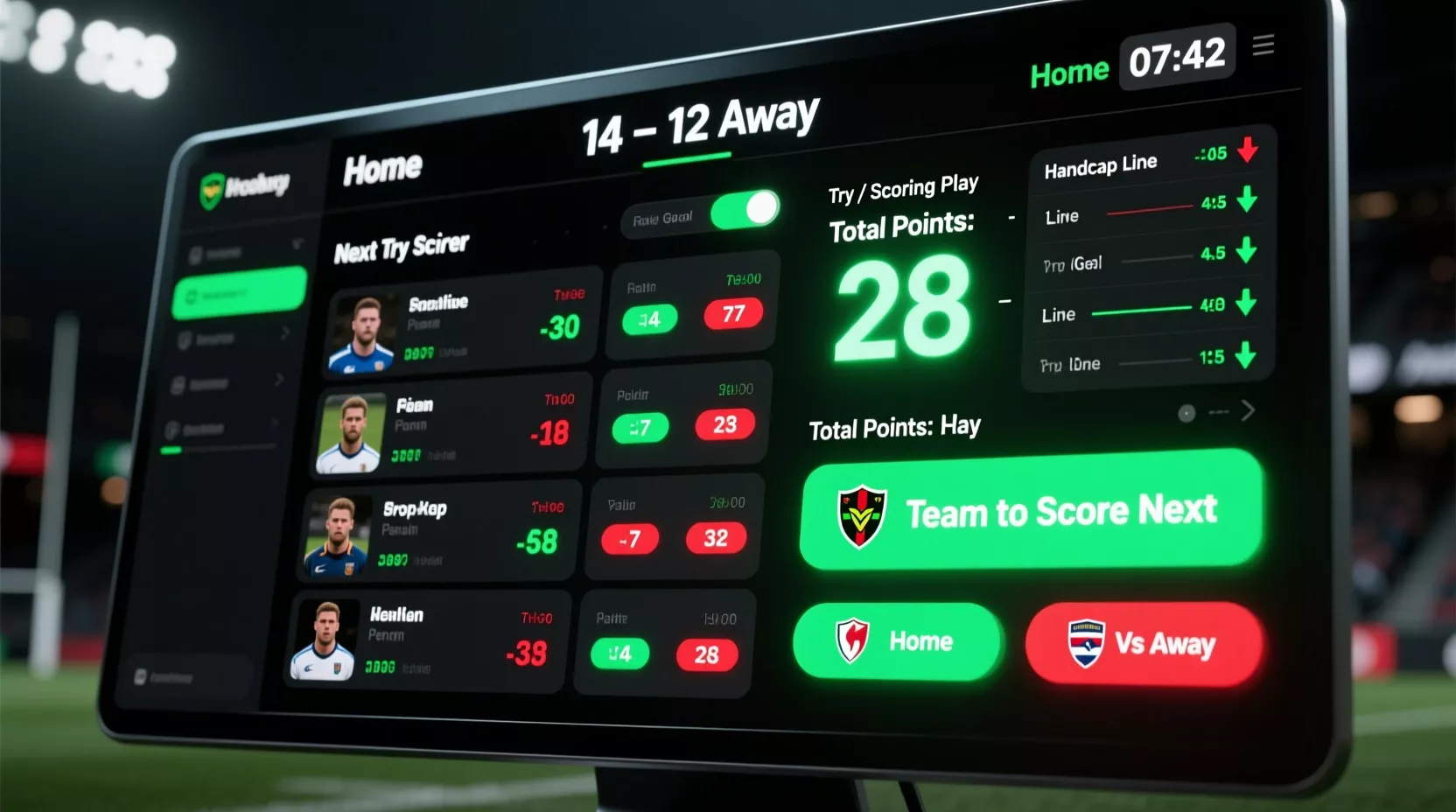
Next scoring play markets ask whether the next points come from a try, penalty kick, or drop goal. This requires reading both teams’ approaches and current field position. If play is in midfield with no clear attacking advantage, the next score might be a long-range penalty from a random infringement. If a team camps five meters out grinding through phases, a try becomes overwhelmingly likely. These markets reward close attention to the tactical situation and quick decision-making when positions shift suddenly.
Drop goals as next scoring play offer fascinating value occasionally. Most matches see zero drop goals, making this outcome very unlikely most of the time. But in tight matches late when teams need three points to win or tie, drop goal probability spikes dramatically. Sharp live bettors recognize these specific scenarios close score, inside five minutes, possession in opponent’s half and back drop goals at odds that don’t reflect the suddenly elevated probability. These situations appear rarely but pay handsomely when identified correctly.
Total points in the next ten minutes creates a micro-betting market on immediate scoring rates. Bookmakers might set the line at 7.5 points, asking whether the next ten minutes produces eight-plus or seven or fewer combined points. This depends entirely on momentum, field position, and whether either team looks capable of scoring. When both teams are in midfield exchanging kicks, under makes sense. When one team is five meters out in sustained attack, over becomes attractive. These short timeframe markets require intense focus on immediate action rather than projecting the entire match.
Will there be a try before half-time markets appear commonly in the final 15 minutes of each half. If play reaches the 35th minute with no imminent scoring threat and teams exchanging kicks, the no try odds become attractive because five minutes isn’t much time to build sustained pressure and score. Conversely, if a team is camped on the line at the 37th minute, yes try odds at evens or better offer value because they’re highly likely to score in the remaining three minutes.
Team to score next converts pre-match match winner markets into micro-markets based on current momentum. Even if you backed the opposition pre-match, you can bet on the currently dominant team to score next, profiting from their momentum burst while maintaining your overall match position. These markets let you trade momentum swings throughout the match rather than holding a single pre-match position through all fluctuations.
Updated handicaps reflecting current score create fascinating situations. Say England led France 14-0 after 20 minutes but the live handicap is now France plus-7 for the remaining 60 minutes. This means bookmakers project England winning the last 60 minutes by seven points, effectively saying the early 14-0 was an aberration. If you disagree and think England’s dominance will continue, backing England to cover that live handicap at good odds offers value. These updated handicaps reset the match from the current moment rather than projecting from zero-zero.
Advanced In-Play Strategies
Momentum trading involves backing teams during their momentum peaks at contracted odds, then hedging when momentum swings back, locking in profit regardless of final result. Say Ireland scores two quick tries against Scotland, taking their match winner odds from 1.60 to 1.30. You back Ireland at 1.30. Ten minutes later, Scotland settles, wins a penalty, and Ireland’s odds drift to 1.45. You now back Scotland at 2.80 in an amount calculated to guarantee profit whether Ireland or Scotland wins. This trading approach treats live betting like financial markets, profiting from volatility rather than final outcomes.
The calculation requires discipline and quick math. If you bet 100 on Ireland at 1.30 to return 130, then bet 40 on Scotland at 2.80 to return 112, you profit 12 if Scotland wins and 30 if Ireland wins. Not huge money, but guaranteed profit from correctly reading momentum swings. These small guaranteed profits compound over multiple matches and multiple trades per match, building bankrolls steadily with minimal risk.
Hedging pre-match positions based on live developments protects profits or cuts losses systematically. If you bet Wales at 3.00 pre-match and they’re now leading comfortably at half-time priced at 1.40, hedging by backing the opposition at inflated odds locks in guaranteed profit. You don’t need Wales to actually win anymore either outcome produces profit. This removes stress and secures winnings when opportunities exceed expectations.
The key to effective hedging is calculating exact amounts that optimize profit across both outcomes rather than just guaranteeing any profit. Maybe you can structure the hedge to produce equal profit whether Wales or their opponent wins, or maybe you structure it to maximize profit if Wales holds while still profiting if they collapse. These decisions depend on your confidence in the lead holding versus your desire for guaranteed profit.
Exploiting overreactions to tries or penalties creates consistent profit opportunities in live betting. When a team scores, their odds typically contract too aggressively for 60-90 seconds because bookmakers and casual bettors overweight immediate events. If the try doesn’t actually indicate sustainable dominance but rather a fluky break against the run of play, backing the opposition at inflated odds during that overreaction window captures value. The odds will settle back toward reality within minutes, allowing you to trade out at profit or hold confident in proper pricing.
This requires distinguishing between meaningful momentum shifts and random variance. A try from a charged-down kick doesn’t indicate attacking dominance worth backing at contracted odds. A try from 20 phases of sustained pressure absolutely does. Reading the difference between these scenarios while everyone else reacts emotionally creates edges throughout matches.
Yellow card opportunities demand immediate action. When a player receives a yellow card for ten minutes, the team with numerical advantage should score during that period statistically. But bookmakers sometimes underprice this advantage because the raw numbers 14 versus 15 don’t look dramatically different. In reality, rugby is tactical and spatial, meaning that extra player creates significant width advantages that should produce points. Backing the team with advantage immediately after the yellow card, before odds fully adjust, exploits this recurring edge.
TMO review periods when referees check potential tries or foul play create unique windows. During the two-minute review, betting might pause or odds might freeze. If you assess the situation faster than the bookmaker adjusts after the decision, you can bet at stale odds. Maybe you’re confident the try will be awarded but odds haven’t contracted yet. Betting during or immediately after TMO reviews before the market fully processes the decision creates small edges that accumulate.
Technology and Tools for Live Betting
Live data feeds separate successful live bettors from struggling ones. Real-time access to possession percentages, territory statistics, tackle counts, and turnover numbers provides quantitative backing for the momentum you’re seeing visually. Maybe you think Ireland is dominating, and the stats confirm 68 percent possession and 75 percent territory. This quantitative validation increases confidence in betting Ireland at current odds. Conversely, maybe visual impression suggests dominance but stats show only 52 percent possession, indicating you’re overweighting recent moments versus sustainable patterns.
Most bookmakers now offer comprehensive live stats directly on their betting platforms. These include score progressions, substitution timings, penalty counts, possession split, and phase play statistics. Utilizing these stats while watching rather than relying purely on visual impression prevents recency bias where the last five minutes distort your perception of the entire match. The combination of watching and checking stats creates the most accurate assessment of momentum and probability.
Streaming quality matters enormously for live betting success. Laggy streams put you several seconds behind live action, meaning you’re betting on outdated game states. By the time you see an event and place a bet, the bookmaker has already adjusted odds based on the live feed they’re watching. You’re always chasing rather than simultaneous. Investing in high-quality internet connection and using bookmakers with the fastest, highest-quality streams minimizes this disadvantage.
Some professional live bettors use multiple screens simultaneously one for the match stream, one for the betting platform, one for statistics, one for social media or live forums discussing the match. This information aggregation lets them synthesize multiple data sources instantly, making faster and more informed decisions than casual bettors watching on one screen. While extreme, it demonstrates how seriously professional live bettors treat information gathering and processing.

Mobile app speed separates premium bookmakers from second-tier ones in live betting contexts. When you need to place a bet in five seconds during an odds window, apps that load slowly or crash under heavy traffic cost you money directly. Testing multiple bookmaker apps during live matches reveals which ones handle the pressure and which ones frustrate at critical moments. Maintaining accounts at several bookmakers provides backup options when your primary app experiences problems.
Notifications for score changes and significant events keep you engaged without requiring constant screen watching. Many bookmakers send push notifications when tries are scored, cards are issued, or other major events happen. These alerts ensure you don’t miss betting windows even if you look away momentarily. However, relying purely on notifications means you miss the visual context that creates edge, so they work best as supplements to active watching rather than replacements.
Odds movement trackers show how quickly odds are changing in response to in-play events. When odds move unusually fast or slow relative to what’s happening on field, it signals something. Fast movement suggests sharp money or bookmaker algorithms reacting strongly. Slow movement suggests odds haven’t caught up to reality yet, creating temporary value windows. Some dedicated betting software tracks these movement speeds across multiple bookmakers, identifying arbitrage or value opportunities in real-time.
Discipline and Risk Management
Live betting creates constant action temptation that destroys bankrolls when discipline breaks down. There are always markets available, always something to bet on, always another ten-minute period or next try scorer option. This perpetual availability means you need ironclad pre-match limits on how many live bets you’ll place per match. Maybe you decide maximum three live bets per match regardless of how many opportunities you think you see. This hard cap prevents the spiral where you’re just betting constantly for action rather than value.
The betting limits should be structural, not aspirational. Don’t just tell yourself you’ll “try” to limit bets build it into your process by literally only funding your live betting account with enough for your predetermined number of bets. If you allow yourself three live bets at one unit each, only deposit three units into your live betting wallet before the match starts. When the money’s gone, you’re done regardless of how attractive later opportunities seem.
Emotional control matters more in live betting than pre-match because the immediate feedback of watching your bets play out creates visceral reactions. When your bet is winning, excitement surges and clouds judgment about whether to hedge or ride it out. When losing, frustration tempts panic hedges at terrible prices just to minimize pain. These emotional reactions override the analytical frameworks that create edge, turning profitable strategies into random gambling. Recognizing when emotion is driving decisions and having predetermined rules prevents these mistakes.
One effective emotional control technique is taking mandatory breaks after bets resolve. Win or lose, step away from betting for five minutes. Get water, check your phone, do anything besides immediately placing another bet while emotional about the previous result. This cooling-off period lets you return to neutral analytical mindset rather than chasing wins or losses reflexively.
Position sizing in live betting requires adjustment from pre-match betting because of higher variance and faster resolution. Live bets often resolve within 20-30 minutes rather than 80, meaning you’re placing more bets per unit of time. Reducing live bet size to 0.5 or 0.75 units instead of standard 1.0 unit accounts for this increased frequency and prevents overexposure. Just because live betting creates more opportunities doesn’t mean your total risk should increase proportionally.
Some bettors use progressive staking where early live bets are small exploratory positions, then they increase size once they’ve confirmed their read on momentum is accurate. Maybe the first bet is 0.5 units testing whether your momentum assessment is correct. When that bet wins, confirming your read, the second bet is 1.0 unit with higher confidence. This graduated approach reduces risk when your match assessment might be wrong while maximizing profit when you’ve correctly identified patterns.
Record keeping becomes even more critical for live betting because you need to track not just outcomes but timing, market type, game state, and reasoning for each bet. A spreadsheet tracking when in matches you bet, which markets, what the score was, what momentum looked like, and whether you won creates a database revealing your strengths and weaknesses. Maybe you discover you’re profitable backing underdogs during momentum swings but losing money on next try scorer bets. This data drives improvement.
The honesty required for effective record keeping is difficult. You need to log every bet including the stupid ones you made while emotional, the times you broke your own rules, the bets you placed because you were bored rather than analytical. Cleaning up records to hide mistakes prevents learning from them. The painful truth that you made three emotional bets during one match and lost all three is exactly the information you need to address behavioral problems.
Knowing when to stop mid-match represents advanced discipline. Maybe you planned three live bets but the first two hit easily and you’re up two units on the match. You could make your third bet as planned, but maybe the smart move is pocketing the two-unit profit and walking away. Live betting’s constant availability means you don’t need to maximize every match you can take wins and wait for the next match. This restraint prevents giving back profits through unnecessary action.
The opposite applies to losing days. When your live betting is struggling, recognizing that your read on momentum is off and stopping before damage compounds saves bankrolls. Not every match is readable, and not every day produces edge. Taking losses gracefully and waiting for better opportunities reflects mature betting discipline that separates long-term winners from eventual losers who can’t stop during cold streaks.
