
Rugby Handicap Betting: Master Spread Betting Strategy for Consistent Profits

 Available in US
What is Handicap Betting in Rugby
Handicap betting exists to solve a simple problem that destroys value for bettors everywhere. When New Zealand plays Namibia, the All Blacks might be priced at 1.02 to win straight up. You’d need to bet a thousand dollars just to profit twenty bucks, and if something weird happens injuries, red cards, absolute chaos you’ve lost a grand for chasing peanuts. That’s terrible risk-reward math, and smart money doesn’t touch those situations.
Enter handicap betting, which levels the playing field artificially by giving the underdog a head start in points or requiring the favorite to win by a specific margin. Suddenly that mismatched game becomes interesting. Instead of betting on New Zealand to simply win, you’re betting they’ll win by 40 points or more. Now the odds shift to something reasonable like 1.85, and you’ve got a bet worth making if your analysis suggests they’ll dominate that thoroughly.
The concept isn’t unique to rugby handicaps exist across most sports but rugby’s scoring system makes handicap betting particularly nuanced and profitable for those who understand it. Unlike football where goals come in ones, rugby racks up points through tries worth five, conversions adding two more, and penalties or drop goals at three apiece. This creates natural clustering around certain margins that sharp bettors exploit constantly.
Bookmakers set handicap lines based on projected performance differences between teams. They’re trying to create a 50-50 proposition where half the money comes in on each side, guaranteeing their profit through the built-in margin regardless of outcome. Their lines incorporate team strength, recent form, home advantage, injuries, weather forecasts, and dozens of other variables. But bookmakers aren’t perfect, and that’s where opportunity lives.
The beautiful thing about handicap betting is it forces you to think beyond simple win-loss outcomes. You can’t just say “New Zealand will win” and pat yourself on the back. You need to analyze how they win, by what margin, through what methods, and whether they’ll push for bonus points late in matches. This deeper analysis separates profitable bettors from casual gamblers throwing money at favorites.
Handicap betting also opens up underdog backing opportunities that straight match betting never provides. Maybe you think South Africa will lose to Ireland, but you don’t believe they’ll get blown out. Backing South Africa with a 15-point head start gives you a bet that cashes even if they lose, as long as they keep it close. Suddenly you’re rooting for competitive rugby rather than miracles.
The terminology varies slightly by region and bookmaker. Some call it handicap betting, others use spread betting or line betting, and Asian handicaps have their own quirks we’ll cover shortly. Fundamentally though, you’re always doing the same thing adjusting the raw scoreline to create more balanced betting propositions with better odds than match winner markets offer.
How Rugby Handicaps Actually Work
Let’s work through a concrete example because abstractions don’t stick. England hosts Italy at Twickenham in the Six Nations. England is vastly superior and priced at 1.08 to win outright terrible value. The bookmaker sets a handicap line with England giving 28.5 points. This means England must win by 29 or more points for your bet to cash. If they win by 28 or fewer, Italy covers the spread and Italy backers win.
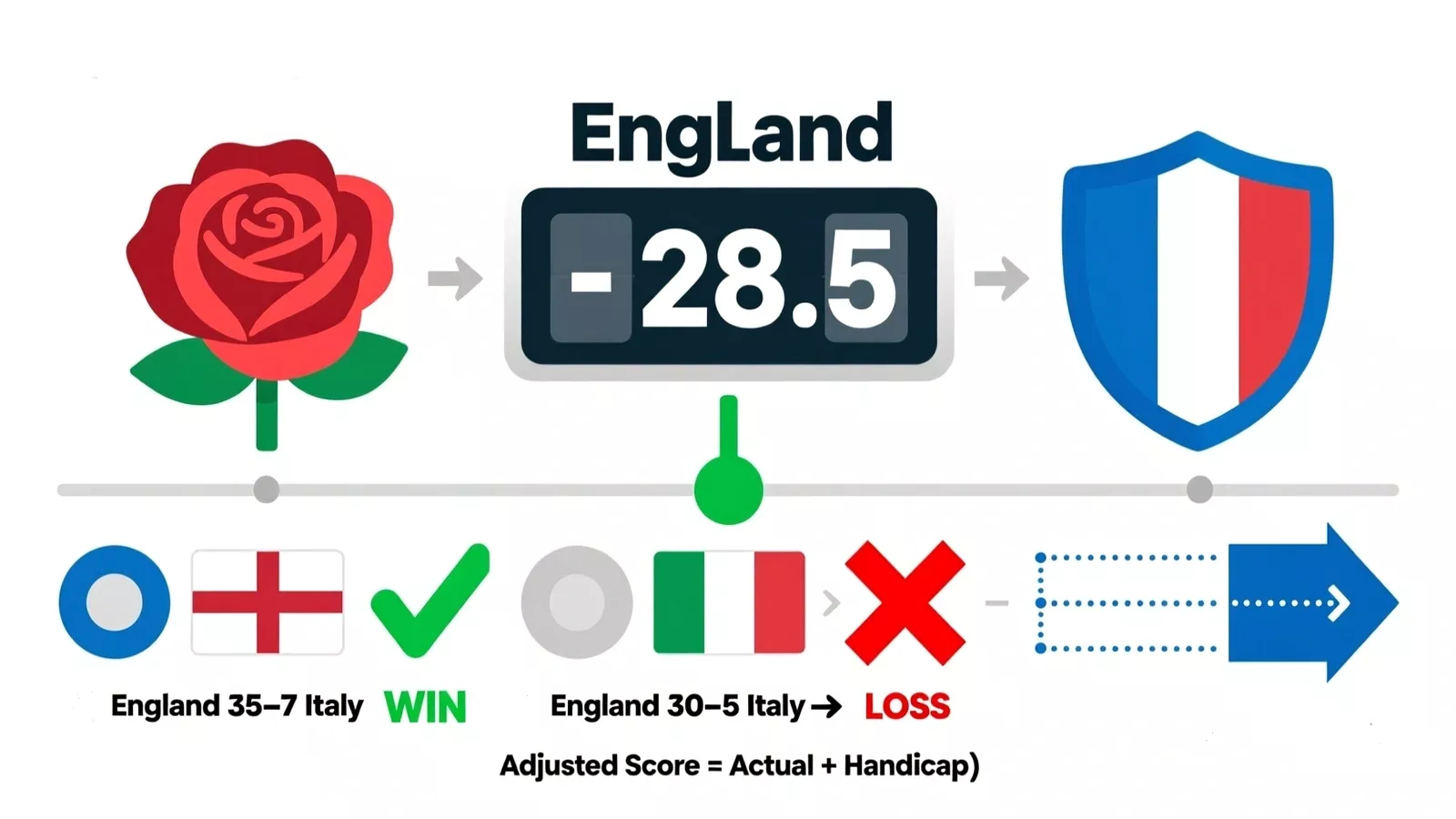
The half-point in that line is crucial. It prevents pushes where the final margin lands exactly on the handicap number. With England -28.5, there’s no scenario where you tie they either cover or they don’t. Some bettors prefer this certainty. Others like whole number handicaps specifically because pushes return your stake, effectively insurance against landing right on the number.
Whole number handicaps create three possible outcomes instead of two. Using England -28 as an example, if England wins by exactly 28 points, it’s a push and everyone gets their money back. England winning by 29-plus covers the spread. England winning by 27 or fewer means Italy covers. This third outcome reduces the bookmaker’s margin slightly but also means you can’t convert near-misses into small wins.
The odds offered on each side of a handicap bet vary based on how confident bookmakers are in their line. Ideally they’d offer both sides at the same price, but in practice, one side often attracts slightly better odds because bookmakers suspect which way sharp money will flow. If England -28.5 is priced at 1.85 while Italy plus-28.5 is at 1.95, the bookmaker is essentially inviting action on Italy because they’re less confident in that side.
Multiple handicap lines exist for the same match, creating a menu of risk-reward options. You might see England -20.5 at 1.70, England -25.5 at 1.85, England -30.5 at 2.00, and England -35.5 at 2.20. Each jump in the line improves your odds but requires England to win more convincingly. Choosing correctly involves understanding England’s historical performance against similar opposition and their motivation to run up scores.
The mental math for tracking handicaps during matches is straightforward. If you backed England -28.5 and they’re leading 35-7 midway through the second half, they’re currently covering by 28 points but need one more score. Conversely, if you backed Italy plus-28.5, you’re still in great shape because England would need to score multiple times in the remaining minutes to cover.
Handicap betting flips the emotional investment too. Without the handicap, England blowing out Italy is boring because the result was never in doubt. With a 28-point spread to cover, every England attack matters even when they’re up 30 points. Did they score that try or not? Did the conversion go over? Suddenly garbage-time points have massive meaning, keeping you engaged when match result betting would have been decided at half-time.
Types of Handicap Bets You’ll Encounter
Standard handicaps are what we’ve been discussing simple point adjustments applied to the final score. These are the bread and butter of rugby handicap betting, available on virtually every match from international tests to domestic club games. They’re easy to understand and offered at every bookmaker, making them the starting point for learning spread betting.
Asian handicaps originated in Asian betting markets and have spread globally because they eliminate the draw possibility in sports where ties are possible. In rugby this matters less than football since draws are already rare, but Asian handicaps still offer advantages. The key innovation is using quarter-point handicaps that create split-stake scenarios.
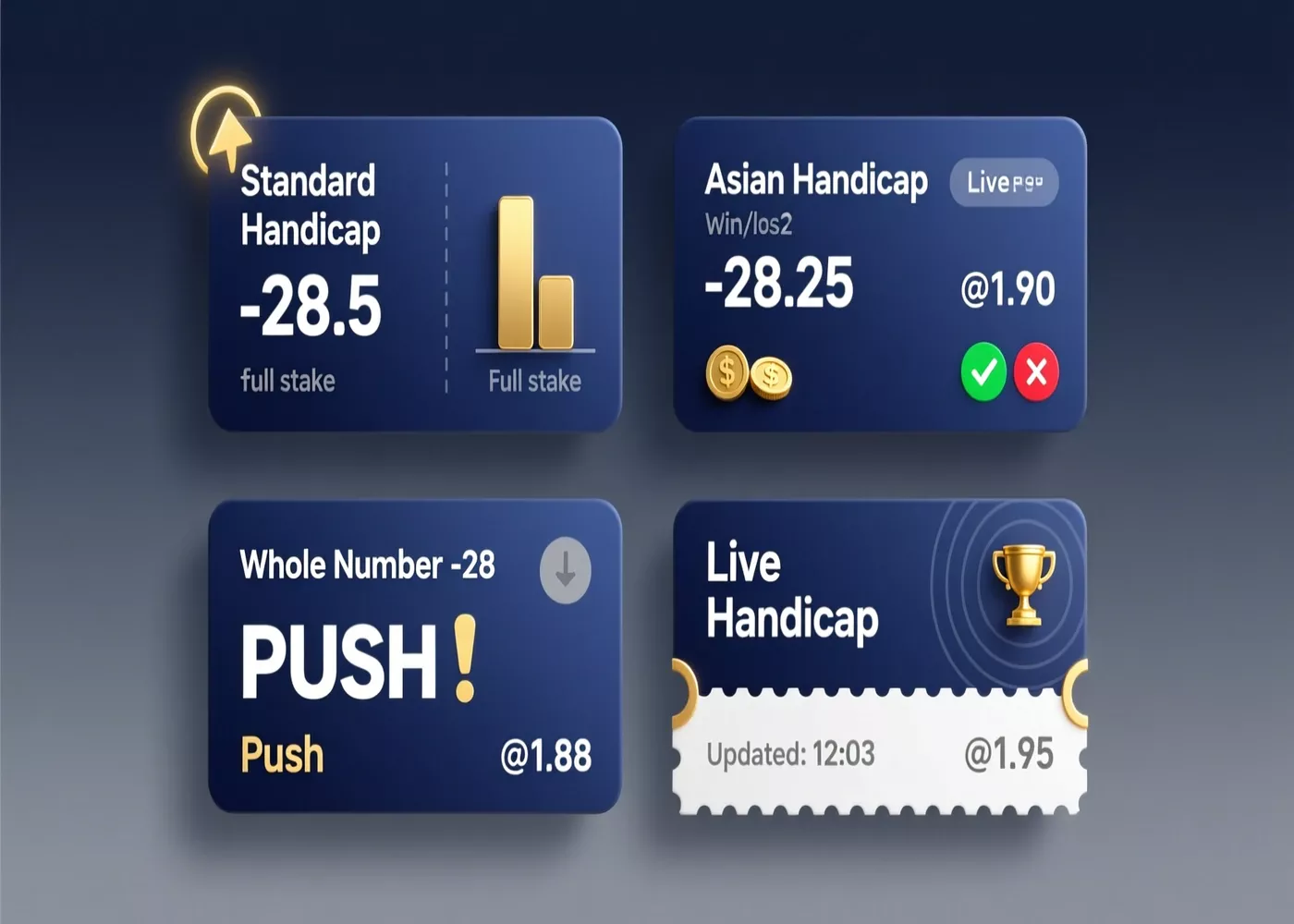
Here’s how quarter-point handicaps work. Say England is favored by 28.25 points. Your stake gets split equally between the 28-point line and the 28.5-point line. If England wins by exactly 28, you push half your bet and lose the other half. If they win by 29-plus, you win both halves. If they win by 27 or fewer, you lose both halves. This split-stake approach reduces variance while maintaining the possibility of partial wins or losses.
Three-quarter point handicaps work similarly but flip the scenario. An England -28.75 handicap splits your stake between -28.5 and -29. If England wins by exactly 29, you win half and push half. This creates situations where you can’t lose everything on near-misses, providing cushion that straight handicaps don’t offer.
Alternative handicaps are simply different lines offered by the bookmaker on the same match. Instead of picking the main line, you can choose more aggressive or conservative spreads. This flexibility lets you tailor bets to your confidence level and risk tolerance. Very confident England covers big? Take the -35 line for better odds. Less sure? The -20 line is safer but pays less.
First-half and second-half handicaps isolate performance in specific match periods. Maybe you think England starts slow but dominates after adjustments, making the second-half handicap more attractive than the full-match spread. Or perhaps you expect Italy to compete early before fitness tells later, suggesting a first-half handicap favoring Italy could offer value even if you expect England to cover the full match.
Live handicap betting updates spreads constantly during matches based on current score and time remaining. These in-play handicaps create fascinating opportunities because bookmakers must adjust rapidly while you’re watching momentum shifts in real-time. If England leads 14-0 after 20 minutes, the live handicap might adjust to England -10 for the remainder, potentially offering value if you believe their dominance will continue or if Italy makes adjustments.
Finding Real Value in Handicap Markets
Line movement tells stories about where money is flowing and potentially where value hides. When handicap lines shift significantly without obvious news, it signals that sharp money has identified an angle. Say the opening line is England -26 on Monday, but by Friday it’s moved to England -29. That three-point shift suggests professional bettors are hammering England, forcing bookmakers to adjust the line to balance their book.
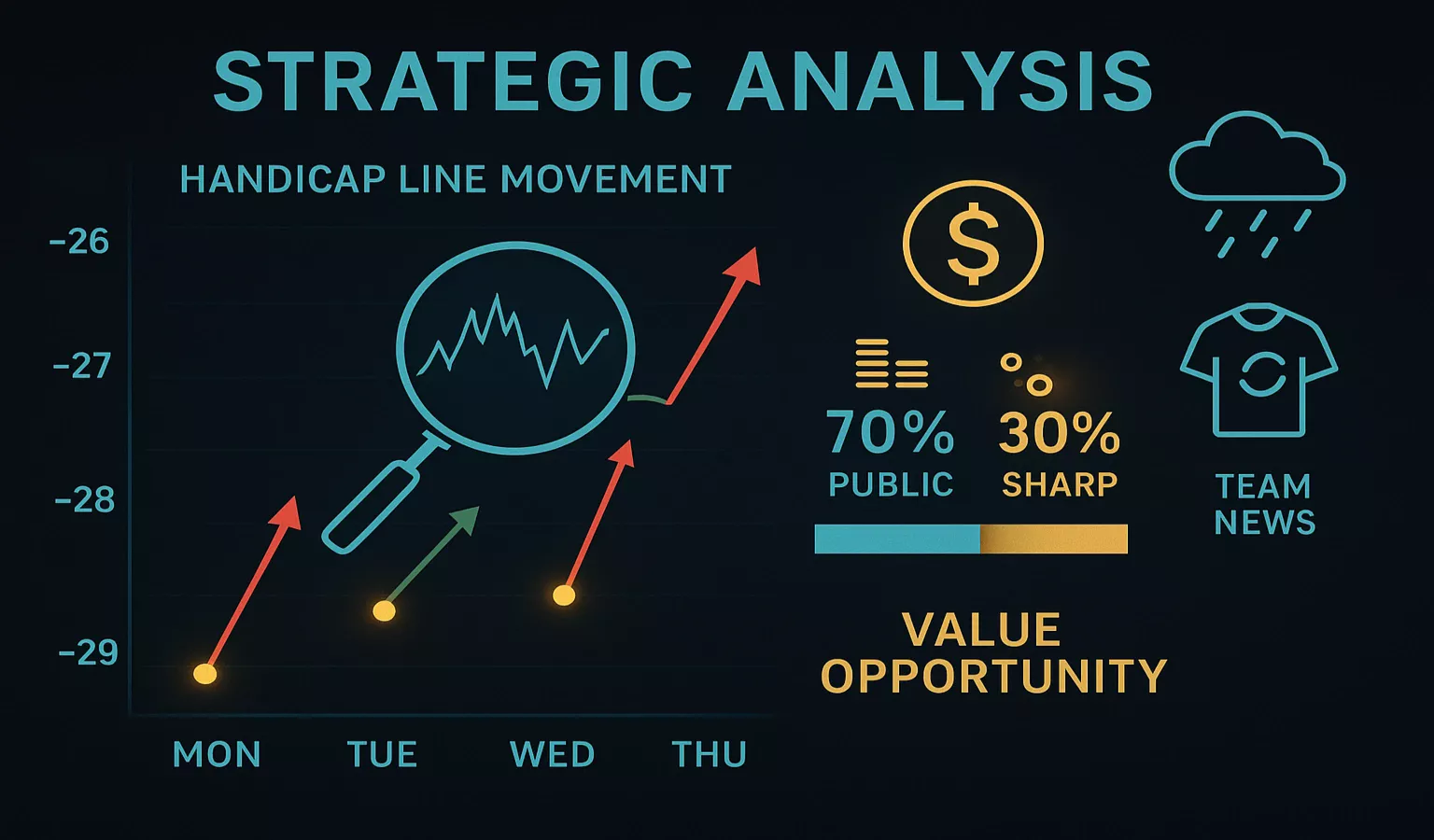
Reverse line movement is even more telling. When the line moves against betting percentages, it reveals something important. If 70 percent of bets are on England but the line moves from -26 to -24, it means the 30 percent of money on Italy represents much larger bets from sharper sources. Bookmakers care about dollar volume, not bet count, so when big money contradicts public sentiment, follow the big money.
Market inefficiencies cluster around certain matchups that bookmakers misprice systematically. Teams playing opponents from significantly weaker tiers often get lines that don’t reflect the true margin potential. New Zealand against Pacific Island nations, for example, frequently exceeds even generous handicap lines because the gulf in resources and development creates blowout potential that casual bettors underestimate.
Public bias skews lines away from value regularly. Famous teams attract betting regardless of whether odds justify it. When the All Blacks are involved, casual money floods their side because everyone wants to back legends. This pushes their handicap line beyond fair value while inflating the opposition’s line. Contrarian betting against public darlings in handicap markets consistently produces profit if you’re identifying genuinely overinflated lines.
Historical performance against the spread reveals patterns bookmakers sometimes overlook. Some teams consistently exceed or fall short of handicap expectations against specific opposition. Ireland might be 8-2 against the spread in their last ten meetings with Scotland, suggesting bookmakers chronically underestimate Irish dominance in this matchup. Tracking these ATS records for matchups you bet frequently builds a database of edge.
Weather forecasts create handicap value that only careful analysis uncovers. Heavy rain expected for an England-Italy match might make England’s 28-point spread harder to cover because wet conditions suppress scoring and keep games closer. Conversely, perfect conditions might make that same spread easy money because England can utilize their superior skill fully. Always checking weather before locking handicap bets is non-negotiable.
Key number analysis borrowed from American football applies to rugby too, though the numbers differ. Rugby’s scoring system creates natural clustering around margins of seven, 14, and 21 points because converted tries are the most common scoring unit. Handicap lines landing on or near these numbers create value or risk depending on which side you’re backing. A line at England -13.5 is meaningfully different from England -14.5 because 14-point margins are common, putting you on the right or wrong side of a frequent outcome.
Motivation factors affect handicap covering more than match outcomes. A team might be favored to win but not motivated to run up the score. England playing Italy in a meaningless final round of Six Nations with nothing at stake might win comfortably but not push for the 30-point margin needed to cover an inflated spread. Conversely, teams chasing bonus points for league positions will attack aggressively even with the match won, making large handicaps more likely to cover.
Squad rotation destroys handicap value when not factored properly. If England rests five starters ahead of a bigger match next week, their ability to cover large spreads diminishes dramatically even if they still win comfortably. Following team news and understanding rotation patterns for clubs juggling multiple competitions creates edges when bookmakers set lines before squad announcements.
Advanced Handicap Strategies That Work
Middling opportunities appear when line movement creates a window where both sides of a handicap can win. Say you bet England -24.5 at opening odds, then the line moves to England -29 by kickoff. Now you can bet Italy plus-29 at the new line. If England wins by 25, 26, 27, or 28 points, both bets cash. This middle ground represents free money when you identify line movement creating these windows early.
The math requires the odds to work in your favor though. If you bet England -24.5 at 1.90 for 100 dollars to win 90, then bet Italy plus-29 at 1.90 for 100, you’re risking 200 total. If England wins by 26, you win both bets for 180 profit. If England wins by 23 or 30-plus, you lose one bet and win the other, breaking even minus the margin. This only works when the middle is wide enough that the probability of landing there justifies the cost.
Buying and selling points is available at some bookmakers, letting you adjust handicap lines by paying increased juice. Want to move England -28.5 down to England -26.5 for extra cushion? You can, but instead of standard odds at 1.90, you might pay 1.70. The reduced odds lower expected value unless you’re highly confident the bought points matter. This tool is overused by scared bettors rather than strategically deployed where genuine edge exists.
Teasing spreads in the opposite direction is rarely offered in rugby but worth understanding if available. You could push England -28.5 to England -30.5 for improved odds, banking on blowout. This increases variance but improves payout when you’ve identified spots where favorites demolish opposition beyond even generous expectations.
Weather adjustments require proactive handicap shopping. Check forecasts 24 hours out, identify matches where conditions will significantly impact scoring, then bet before bookmakers adjust lines fully. If heavy rain is forecast for an open stadium but the handicap line still reflects good weather expectations, you can bet unders or take the underdog plus the points before the market corrects.
Derivative handicap betting combines multiple related handicaps in creative ways. Maybe you bet the full-match handicap and the first-half handicap, banking on one team starting fast and maintaining dominance throughout. Or you bet contradictory handicaps if you expect score patterns to diverge between halves. These combination approaches require sophisticated game-script prediction but offer unique payoff structures.
Tournament progression betting tracks how teams approach matches based on tournament standing. A team needing bonus points for playoff qualification will push the score aggressively even with the match won, making large handicaps covering more likely. Teams safely qualified with nothing to gain might ease off, keeping margins tighter. Following tournament mathematics reveals which teams face situations demanding score-running versus score-protecting.
Correlation analysis between handicap markets and totals markets reveals when both are mispriced. If England -28.5 is offering value and the totals line is set low, there’s likely inefficiency because England covering a large spread typically requires high total scoring. Identifying these correlated opportunities lets you exploit multiple markets simultaneously when bookmaker pricing doesn’t align properly across related outcomes.
Common Handicap Betting Mistakes to Avoid
Chasing losses through handicap inflation ruins bankrolls faster than any other handicap betting error. You lose three bets backing favorites at standard lines, so you start taking bigger spreads for better odds, hoping to recover losses quickly. England -24.5 didn’t cover, so next time you take England -30 for +2.20 odds. This death spiral ends badly because you’re adding risk exactly when you should be reducing it.
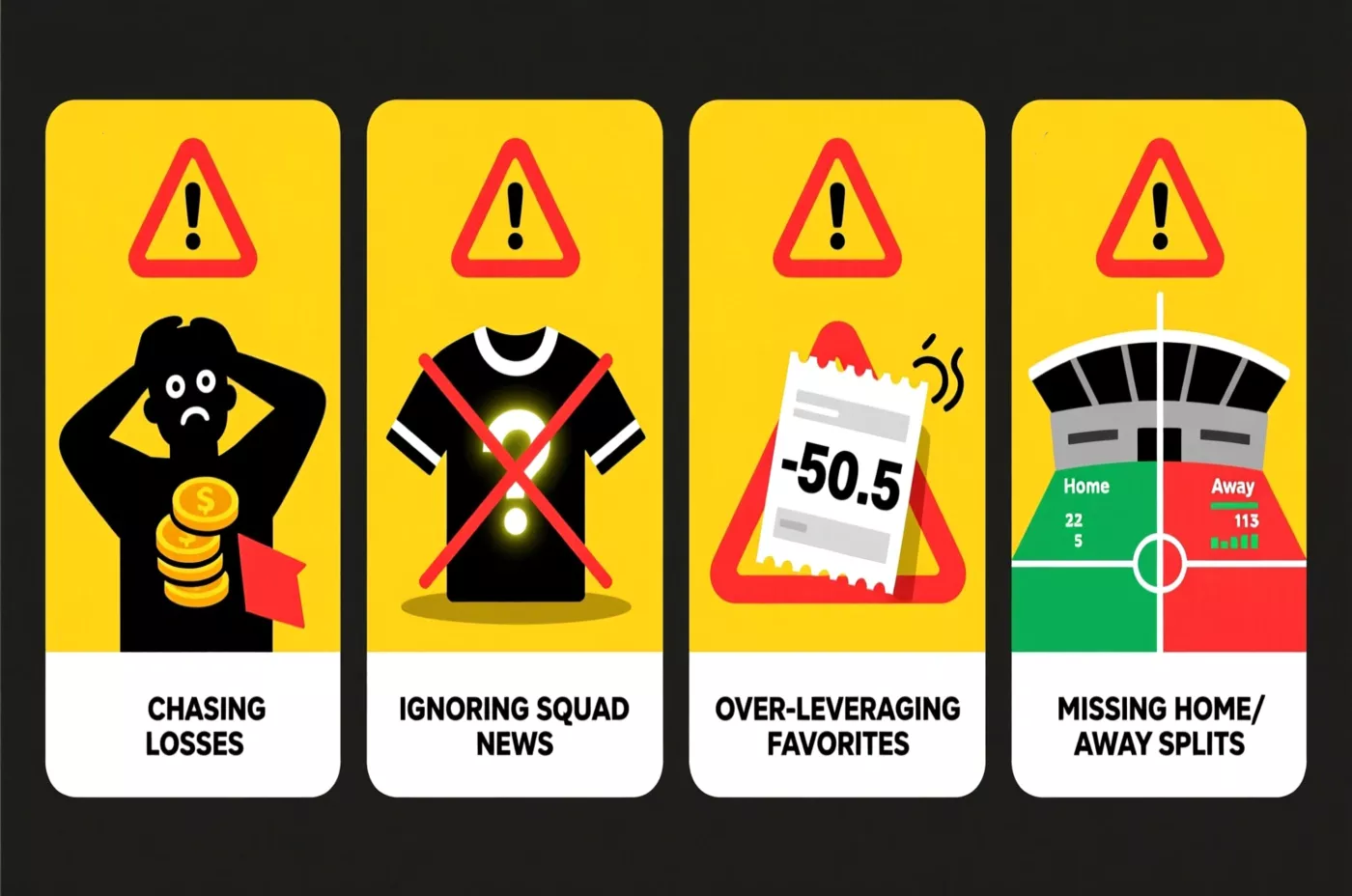
The underlying mistake is increasing risk while emotional rather than systematic. Handicap betting should always reflect your analysis of probable margin, not your desperation to win back losses. If your model says England wins by 26 points on average against this opponent, betting them -30 to chase losses abandons the disciplined approach that creates edges in the first place.
Ignoring home and away splits kills profitability in handicap betting. Some teams perform dramatically differently depending on venue. Wales at Principality Stadium with the roof closed is a different beast than Wales traveling to Paris or Twickenham. Applying the same handicap expectations regardless of venue abandons critical information that odds sometimes underprice.
Check the actual numbers. Ireland might be 12-2 straight up at Aviva Stadium over the last three years but only 6-2 against the spread, suggesting bookmakers overprice their home dominance. Meanwhile, on the road they might be 8-6 straight up but 10-4 against the spread because bookmakers overestimate their disadvantage. These splits create systematic edges for bettors tracking venue-specific performance.
Misunderstanding handicap mechanics leads to catastrophic errors for beginners. The most common confusion involves which way the points flow. If you bet France plus-12.5 points, you’re adding those points to France’s actual score to determine if your bet wins. France loses 24-10, but with the handicap they “score” 22.5 versus the opponent’s 24, still losing your bet. Some beginners think plus-points mean the opponent needs to win by more, getting the direction completely backward.
Another mechanical confusion involves pushes with whole-number handicaps. Betting Scotland plus-14 means if they lose by exactly 14, you neither win nor lose your stake returns. But some bettors expect a win in this scenario, creating frustration and arguments with bookmakers. Understanding push rules before betting prevents these misunderstandings.
Over-leveraging favorites at inflated spreads is perhaps the most expensive mistake casual bettors make. They see New Zealand playing Uruguay and think “the All Blacks will destroy them” so they bet New Zealand -50.5 for improved odds. But even dominant teams hit performance ceilings. Uruguay might lose 55-0, covering that spread by a whisker, or they might lose 62-10 depending on All Blacks substitution patterns and whether they play seriously for 80 minutes. The -50.5 line offers minimal edge for substantial added risk.
The smarter play is taking smaller spreads at lower odds when your analysis supports them, rather than chasing the thrill of big odds on unlikely outcomes. If New Zealand -35 is your projection based on historical data, betting them -50 for slightly better odds abandons your model for gambling excitement.
Betting without checking squad news wastes money on handicaps more than match betting. If England names a heavily rotated squad for a match you expected them to dominate, their handicap-covering ability diminishes even if they still win comfortably. Key players being rested means the team can’t express their full quality, making large spreads dangerous.
Following team announcements religiously and adjusting or avoiding bets accordingly is crucial. Many profitable handicap bets die when the teamsheet drops revealing unexpected rotation. Sharp bettors wait for squad announcements before betting, even if it means slightly worse odds, because the information value outweighs the price deterioration.
Union vs League Handicap Differences
Average margins diverge significantly between codes, fundamentally changing handicap betting approaches. Rugby league’s six-tackle rule creates predictable structure where scores converge toward similar ranges more consistently than union’s unlimited possessions allow. League margins typically cluster around 12-14 points between evenly matched sides, while union margins vary wildly from 3 to 60 depending on opposition gulf.
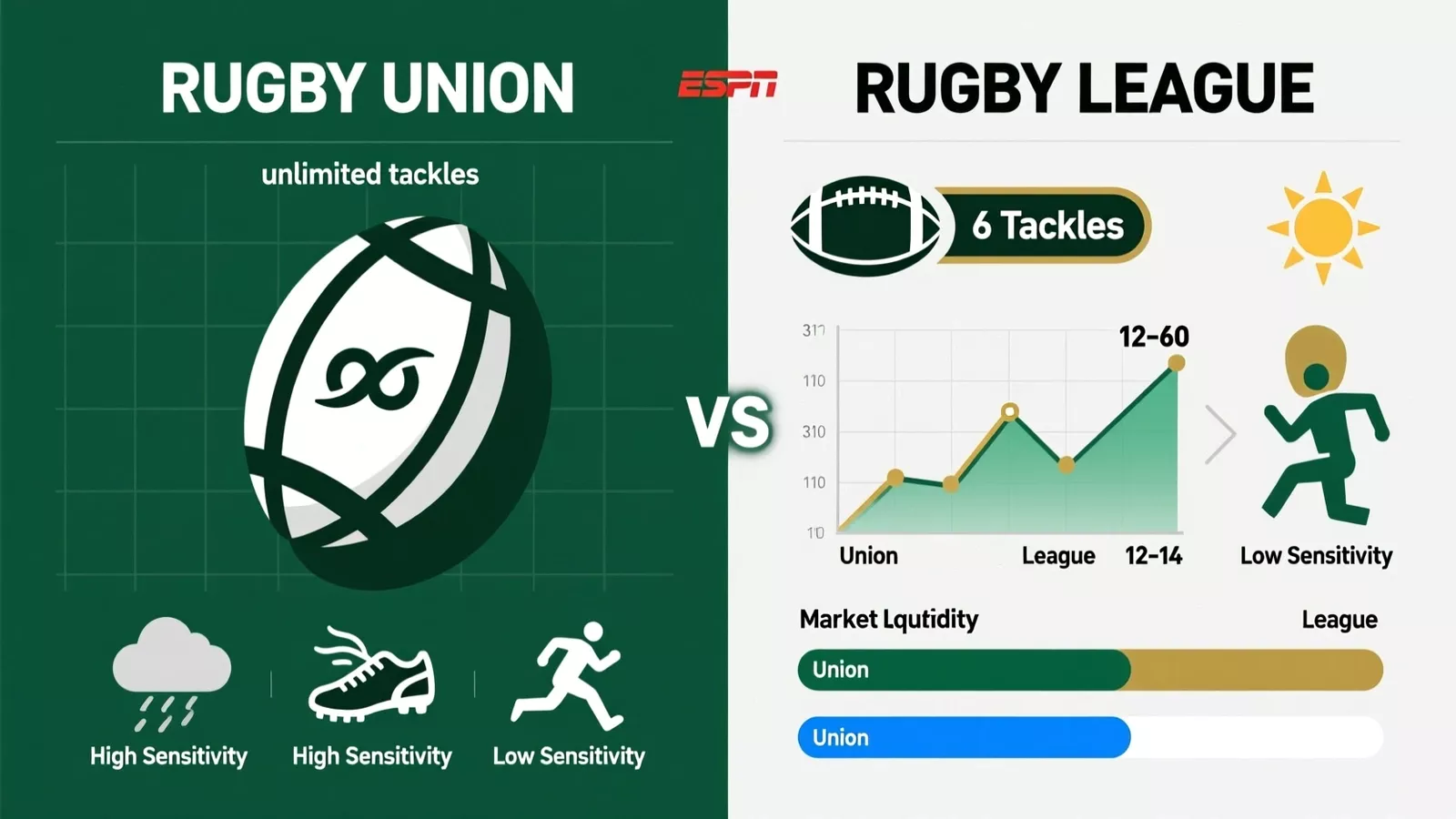
This variance matters enormously for handicap selection. In league, taking a 20-point spread represents a strong opinion that one team thoroughly dominates. In union, 20-point spreads appear regularly even for competitive matches because the sport’s nature allows score running when one team controls possession for sustained periods.
Tactical conservatism affects codes differently. Rugby union allows ultra-defensive strategies where teams kick for territory, minimize risk, and play for penalties. These conservative approaches keep margins tight even when skill levels differ significantly. South Africa’s recent World Cup campaigns demonstrate this winning matches 13-3 or 16-9 rather than blowing opponents out despite being clearly superior.
Rugby league’s six-tackle rule prevents extreme conservatism. Teams must attack eventually because possession automatically changes after six tackles. This forced aggression means superior teams usually express their quality through score, making large handicaps more reliable when talent gaps are genuine.
Scoring frequency patterns differ between codes too. Rugby union can go 20 minutes without scoring while teams trade territorial kicks and build pressure. League produces scoring more consistently because the structured tackle count creates predictable attacking patterns every set. This consistency makes league totals and handicaps easier to project statistically, while union introduces more variance that models struggle to capture.
Try-scoring patterns affect handicap betting substantially. In union, 70 percent of tries come from backs, particularly wingers, because expansive play sends the ball wide. League’s structured attack means forwards score much more frequently through pick-and-go near the line or second-phase plays. This doesn’t directly impact handicaps, but understanding where points come from helps predict game flow and whether margins will expand.
Bonus point considerations exist in union competitions like the Premiership, Top 14, and Super Rugby where teams earn bonus points for losing by seven or fewer points or scoring four-plus tries. These bonus incentives change how teams approach matches with results decided. A union team leading by 15 points late might attack aggressively for a fourth try, expanding the margin. A league team in the same situation typically shuts down, protecting the lead. This affects handicap covering rates for favorites.
Defensive structures differ between codes. Union’s unlimited tackle rule means defenses organize through multiple phases, creating compressing patterns that are hard to break. League’s six-tackle limit forces defenses to reset regularly, creating more space and theoretical scoring opportunities. This structural difference explains why league tends toward higher scoring than union when comparing matches between evenly matched teams.
Weather impacts codes differently regarding handicaps. Rain affects union more severely because the unlimited tackle rule means teams attempt more passes, creating more handling error opportunities. League’s structured approach with fewer passes per possession means rain impacts it less severely. Wind affects kicking-dependent union strategies more than league, where grubber kicks along the ground replace long aerial kicks.
The final critical difference involves market depth and liquidity. Rugby union’s global popularity means more bettors, sharper lines, and tighter bookmaker margins on handicap markets. Finding value requires deeper analysis. League markets, particularly outside NRL and Super League, see less sharp money, creating pricing inefficiencies that diligent bettors exploit. This edge isn’t about one code being easier, but rather where market efficiency allows skilled analysis to shine.
